IranPersiaVoyage
─────
(✍ENGLISH text is always below the French text)
-Norouz, Nouvel An Iranien, L’équinoxe vernal du mois de Mars, 15’000 ans d’Histoire à nos jours. Post 23.03.2023 ⏬
-La turquoise d’Iran vidéo +✍ENGLISH Turquoise from Iran video. Post 10.04.2023 ⏬
-Célébration du Lotus, célébration de l’été, Tiregan le 4 juillet +✍ENGLISH Lotus celebration, summer celebration, Tiregan July 4. Post 05.07.2023 ⏬
-Tirgan, la célébration de l’été, Arash l’Archer 4 juillet +✍ENGLISH Tirgan Summer festival 4th July, Arash the Archer ⏬
─────
➡️ Histoire de l’Iran et Islam / Iran and Islam
https://iranpersiavoyage.wordpress.com/histoire-de-liran-et-islam/
➡️ UNESCO Iran Caravansérails / Caravanserais
https://iranpersiavoyage.wordpress.com/unesco-iran-caravanserails/
─────

Norouz, Nouvel An Iranien, L’équinoxe vernal du mois de Mars, 15’000 ans d’histoire à nos jours.
https://iranpersiavoyage.wordpress.com/2023/03/23/norouz-nouvel-an-iranien/
(Suite) Norouz, Nouvel An Iranien (2)
https://iranpersiavoyage.com/2024/03/26/norouz-nouvel-an-iranien-2/
─────
(✍ENGLISH video below the French video)
La turquoise d’Iran documentaire de Patrick Voillot
Ce film vous fera pénétrer dans l\’un des pays les plus fermés du monde mais aussi l\’un des plus fascinants. Les Iraniens extraient dans la plus grande discrétion les plus belles turquoises du monde depuis des siècles.
C’est à l\’Est du pays près de la frontière de l’Afghanistan où aucun étranger ne pénètre que se situent les mines. Près de la ville de Nishapur, dans un décor désertique, sont extraites depuis 4 siècles les plus belles turquoises du monde.
Les hommes du village de Firuze (turquoise en persan) creusent la montagne de père en fils.
Dans des tunnels sans fin, les mineurs sont à la recherche des veines bleues qui traversent la roche sombre. Les plus vieux trient les pierres sur le carreau de la mine puis les stockent dans une salle très surveillée en attendant la vente aux enchères organisée chaque mois dans la mine. Seuls sont admis des marchands connus et bien évidemment iraniens.
Les turquoises ainsi achetées alimentent une véritable industrie artisanale dans la ville sainte de Machhad. Dans les bazars, les bijoutiers fabriquent en quantité des bijoux, notamment des bagues en argent, ornées de turquoises portées par les hommes musulmans suivant les conseils du prophète. Dans la tradition persane porter une turquoise éloigne le mauvais œil et protège de ses ennemis.
La route de la turquoise débuta il y a bien longtemps : dans les trésors de Suse et de Persépolis, les archéologues ont découvert de nombreux joyaux ornés de la pierre bleue, mais c’est surtout dans le Trésor des Shahs d\’Iran, au plus profond des sous-sols de la Banque Melli à Téhéran, que se cache l’une des plus grandes quantités de pierres précieuses et de bijoux connus au monde. Pratiquement jamais filmé, vous aurez le privilège de vous plonger dans ce Trésor.
Appelé par le Shah d\’Iran, la famille Boucheron participera à la réhabilitation et à l\’exposition de ce Trésor telle qu\’elle est aujourd\’hui. Cette histoire vous sera contée dans ce film et vous permettra de découvrir les créations contemporaines en turquoises du Joaillier Boucheron.
✍ENGLISH
Turquoise from Iran documentary of Patrick Voillot
This film will take you to one of the world’s most inaccessible countries, yet one of the most fascinating. For centuries, the Iranians have been extracting the most exquisite turquoises in our planet.
The mines are located in the east of the country, near the border with Afghanistan, where no foreigners can enter. It is near the town of Nishapur, in desert-like surroundings, that for the last four centuries these exquisite turquoises are extracted.
The men in the village of Firuze (Persian for turquoise) have from one generation to the next been digging in the mountains. In the endless tunnels the miners look for blue veins which pass through the dark rock. The older men sort out the stones on the floor of the mine and then store them in a well guarded room while waiting for their monthly auction held in the mine itself. Only known merchants who are genuine Iranians are admitted.
Turquoises purchased in this way fuel a sizeable artisanal crafts industry in the holy city of Mashad. In the bazaars the jewelers make large quantities of ornaments, in particular silver rings, studded with turquoise and worn by Muslim men following the advice of their prophet. According to Persian tradition, wearing a turquoise keeps away the evil eye and is a protection against enemies.
The Turquoise Route was established long ago. In the treasury vaults of Suse and Persepolis, archeologists discovered large quantities of jewelry adorned with this blue stone; however, the world’s largest known reserves of precious stones and jewels are hidden in the Treasury of the Shahs of Iran, in the depths of Melli Bank’s basements in Tehran. You will have the privilege of being immersed in this Treasury which has hardly ever been filmed.
At the Shah of Iran’s request, the Boucheron family helped in the Treasury’s restoration and its displays as we know them today. This story will be told to you in the film and will allow you to discover jeweler Boucheron’s contemporary turquoise creations.
─────
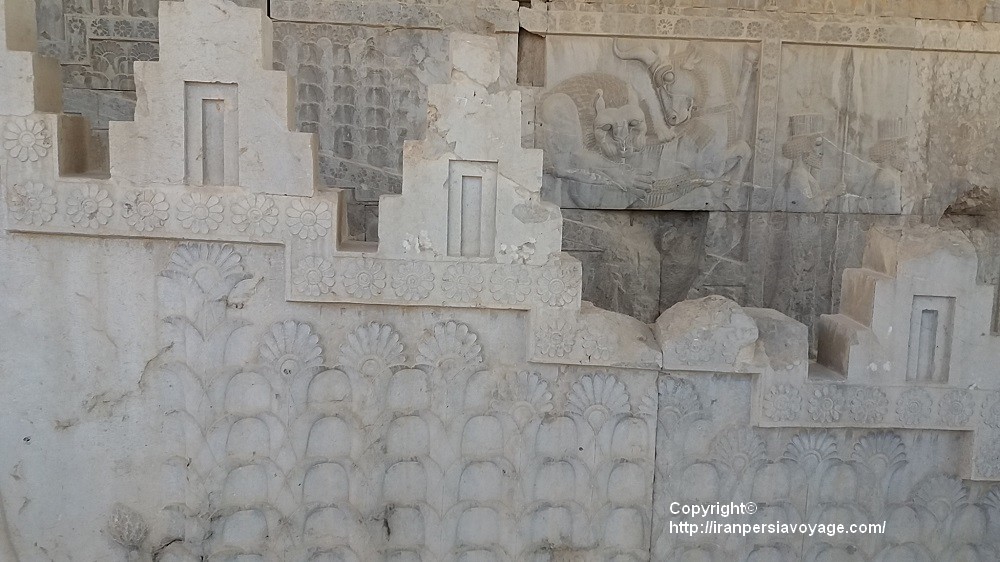
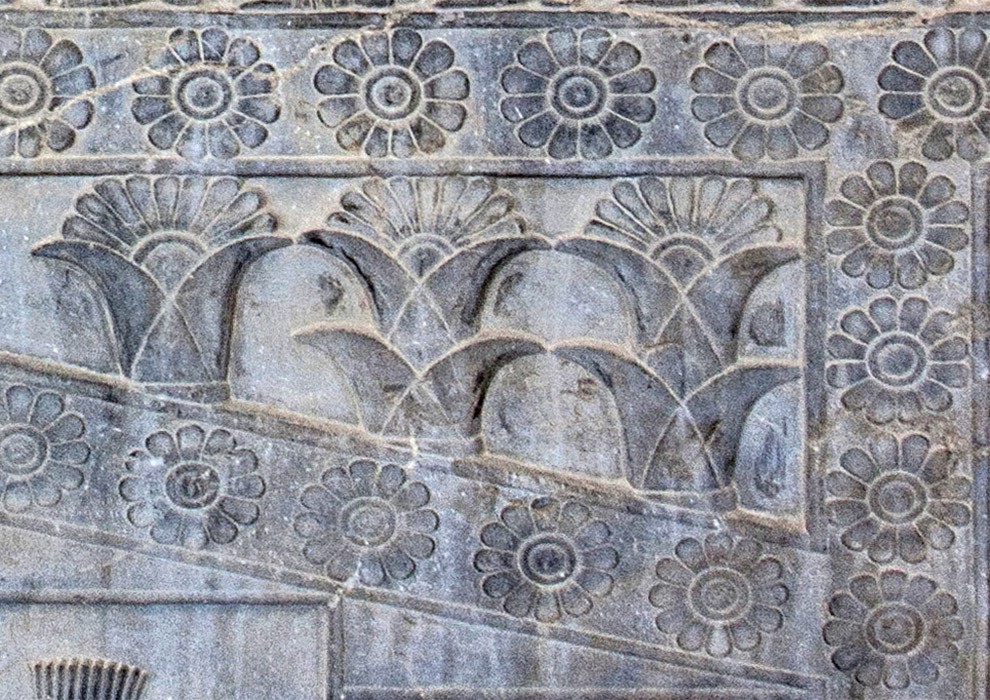
Iran, célébration du Lotus et célébration de l’été, Tiregan le 4 juillet
L’Iran aux files de sa longue histoire a subi de nombreux changements et beaucoup d’anciennes coûtumes sont oubliées mais il en reste des traces. Depuis la nuit des temps les anciens Iraniens avaient pour habitude de célébrer avec des fêtes primaires chaque nouvelle saison. Avec le temps ce sont devenu des grandes festivités avec des rites plus précis.
Et fin juin coïncidant avec la floraison des fleurs de lotus au début de l’été, moment où le soleil a atteint sa plus haute altitude et que les jours s’allongent, ça en devient un symbole.
Le lotus(1) célébré le 27 juin est en fait en prélude à la célébration de Tiregan(2) qui est le 4 juillet.
En Iran, la première trace du symbole du lotus apparaît dans l’art d’Élam. Les Élamites, civilisation de la fin du IVe millénaire av. J. -C., au 1er millénaire après J. -C., ont vécu sur le plateau iranien. (Par ailleurs, la province iranienne d’Elam (Ilam), épicentre des Elamites existe toujours avec des sites archéologies fascinants).
Les fleurs de lotus représentent la pureté, car même si elles poussent dans la boue, elles sont propres et l’aspect sacré du lotus qui s’ouvre à l’aube et se referme au coucher du soleil est étroitement lié au culte du soleil, Mithra(3) Dieu Indo-Iranien du soleil. Le soleil, symbole de la création, de la fécondité, du renouvellement de la vie et … parce que ses feuilles et ses fruits sont en cycle et que le cycle est la forme parfaite, le lotus est le symbole de l’idéal.
Et symbole de l’eau, liée à la Déesse Indo-Iranienne Anahita(4), qui était très vénérée durant la période Achéménide (558-330 av. J. -C.) Des gravures(5) de lotus dans l’ancienne cité de Perseplis à Shiraz témoignent l’importance de cette fleur.
Dans le zoroastrisme(6), cette fleur est le symbole d’Ahura Mazda, le créateur la plus haute divinité du zoroastrisme.
Le symbole du lotus fut aussi beaucoup utilisé pendant l’Empire Iranien Sassanide (224 – 651 de notre ère.)
Dans l’Iran moderne, la célébration du lotus au 27 juin n’existe plus, c’est plutôt la célébration de Tiregan du 4 juillet qui reste une date importante dans la culture iranienne puisque s’est lier avec un héros iranien Arach. L’histoire d’Arach l’Archer est racontée de génération en génération dans les familles.
Photos: Gravures de lotus dans l’ancienne cité de Persépolis à Shiraz Iran.
(1)
-LA SIGNIFICATION DU LOTUS POUR L’ANCIENNE CULTURE PERSE
Le lotus était une fleur très importante pour les Perses, cet ancien peuple qui régna autrefois sur une bonne partie du Moyen-Orient. Ils voyaient à travers elle un symbole de pureté et de féminité.
Connue en langue persane sous le nom de « naheed », des nombreux mythes nous décrivent comment le lotus permet de réveiller ce qui sommeille dans le cœur des hommes et les fait se lever pour de grandes causes.
La religion zoroastrienne (une des premières religions monothéistes, qui se développa en Perse il y a plusieurs millénaires) accorde à la fleur de lotus la signification mystique de l’eau.
Concrètement, notre fleur symbolisait les pouvoirs mystérieux qui sommeillent dans les profondeurs (de l’eau, de l’univers ou même de l’être humain) et qui remontent parfois à la surface…
En tout cas, l’art iranien (l’Iran est le descendant direct de l’empire perse) est assurément marqué par le symbole de la fleur de lotus porte-bonheur. L’architecture des temples et palais par exemple lui fait la part belle.
Dans la culture perse, le langage des fleurs est en fait un sujet profondément étudié et, à ce titre, le lotus est souvent associé à d’autres espèces végétales pour combiner leurs messages/effets.
Voici quelques associations florales :
Le lys : Fleur de pureté, le lys rajoute un sens d’élévation supérieure encore.
La pivoine : Expression de la beauté féminine, la pivoine offre au lotus un sens de création de la femme.
L’orchidée : Fleur de la passion par excellence, l’orchidée potentialise les messages spirituels de la fleur de loturs
Le papyrus : Symbole de la vie car il pousse au bord du Nil, un bouquet de papyrus et de lotus définit les naissances.
La tulipe : En floraison, les tulipes symbolisent l’espoir de lendemains meilleurs.
L’hibiscus : l’hibiscus incarne la délicatesse et la fraicheur du renouveau
https://la-porte-du-bonheur.com/blogs/blog/comprendre-la-vraie-signification-de-la-fleur-de-lotus
(2)
-Tirgan, la célébration de l’été, Arash l’Archer, 4 juillet
Voyez le post suivant..
(3)
-Relief représentant Mithra, dieu iranien du soleil, sacrifiant le taureau
Venu d’Iran, le culte du dieu du soleil Mithra se développe danstout l’empire romain. Hiérarchisé en sept étapes d’initiation, ce culte à mystère comptait plusieurs rites dont le sacrifice d’un taureau.
https://louvre-lens.visite.zone/stage/604f71bdd9003d39ae2dff23/
(4)
-Anahita, dont le nom signifie «Immaculée», déesse perse de l’eau et de la fertilité, était très vénérée durant la période achéménide (558-330 av. notre ère) Elle était associée au grand dieu Mithra.
Identifiée à la planète Vénus, elle était censée descendre d’Isthar, divinité babylonienne de la fertilité associée à la même planète. Au IVe siècle avant notre ère, le roi Artaxerxés II ordonna que l’on dressât des images d’Anahita dans toutes les grandes cités de l’empire. Le culte de la déesse s’étendit à travers l’Asie Mineure et l’Asie occidentale. Anahita venait en aide à Spenta Armaiti et était associée à Haoma, le dieu qui conférait l’immortalité.
Anahita était souvent représentée vêtue d’habits d’or, d’une couronne et de bijoux.
Ses animaux consacrées étaient la colombe et le paon, et la prostitution sacrée faisait partie de son culte.
https://mythologica.fr/perse/anahita.htm
(5)
-Lotus bas-relief in Persepolis, iran – stock photo
https://www.gettyimages.ae/detail/photo/lotus-bas-relief-in-persepolis-iran-royalty-free-image/600257173
-File:Persepolis lotus and rosettes in the Palace.jpg
https://commons.wikimedia.org/wiki/File:Persepolis_lotus_and_rosettes_in_the_Palace.jpg
(6)
-Zoroastre (astre d’or), ou Zarathoustra ( «celui à la lumière brillante»), était un réformateur religieux de l’ancien Iran.
https://mythologica.fr/perse/zarathoustra.htm
+
-La signification des motifs à fleurs sur les armes et armures iraniennes
http://www.teheran.ir/spip.php?article1530#gsc.tab=0
-Fleurs de Perse
Malgré leur allure française, les mots rose et tulipe ont une origine orientale, plus précisément perse.
https://www.antidote.info/fr/blogue/enquetes/fleurs-de-perse
-Pièces de photo Iran, 250 rial, 1993-2003, Lotus Flower,
https://www.alamyimages.fr/pieces-de-photo-iran-250-rial-1993-2003-lotus-flower-image419072872.html
✍ENGLISH
Iran, celebration of the Lotus and celebration of summer, Tiregan on July 4
Throughout its long history, Iran has undergone many changes and many ancient customs have been forgotten, but traces remain. Since immemorial times, ancient Iranians have celebrated each new season with primary celebrations. Over time, these have evolved into major festivities with more specific rituals.
And late June coincides with the blooming of the lotus flowers, when the sun has reached its highest altitude and the days are getting longer, thus it became a symbol.
The lotus(1) day on June 27 is in fact a prelude to the Tiregan(2) celebration on July 4.
In Iran, the first trace of the lotus symbol appears in the art of Elam. The Elamites, a civilization from the end of the 4th millennium BC to the 1st millennium AD, lived on the Iranian plateau. Note that the Iranian province of Elam (Ilam), the epicenter of the Elamites, still exists, with some fascinating archaeological sites.
Lotus flowers represent purity, for even though they grow in mud, they are clean, and the sacred aspect of the lotus, which opens at dawn and closes at sunset, is closely linked to the cult of the sun, Mithra(3) the Iranian-Indo God of the Sun. The sun, symbol of creation, fertility, renewal of life and… because its leaves and fruit are in a cycle, and the cycle is the perfect form, the lotus is the symbol of the ideal.
And symbol of water, linked to the Iranian-Indo Goddess Anahita(4), who was highly venerated during the Achaemenid period (558-330 BC). Lotus engravings(5) in the ancient city of Perseplis in Shiraz bear witness to the importance of this flower.
In Zoroastrianism(6), this flower is the symbol of Ahura Mazda, the creator and highest deity of Zoroastrianism.
The lotus symbol was also widely used during the Iranian Sassanid Empire (224 – 651 CE).
In modern Iran, the lotus celebration on June 27 no longer exists. Instead, the Tiregan celebration on July 4 remains an important date in Iranian culture, as it is linked to the Iranian hero Arach. Arach the Archer story is passed down from generation to generation in the families.
Photos: Lotus carvings in the ancient city of Persepolis in Shiraz Iran.
(1)
-Symbol of lotus in ancient world
In ancient Iran, the first time trace of lotus symbol is seen in Elam art; Central dome indicates a glazed tile belonging to 2nd BC shows design of a 12 rose leaf flower which is very similar to designs of lotus of Achaemenid’ period.
Color used in decoration of this tile is white and yellow. This tile is keeping in Louver museum. In addition, on a crockery dish in form of cylindrical box belonging to 7th or 8th BC, rose flowers and twin bloom of 12 rose leaves Lotus, has been designed on it (Majidzadeh, 1991, 82).
These two samples of application of lotus role in Elamite art, is introduction of presence of this ancient symbol in Iran land which plentifully has been used in Achaemenid’ art and after that in Sassanid designs.
In Achamenid palaces both in Susa and Takht-e-Jamshid, the Lotus has pictured so that statistically more includes visual symbol.
http://www.lifesciencesite.com/lsj/life0803/052_6611life0803_309_312.pdf
-The Meaning of the Lotus Flower in Ancient Iran
The Lotus also had special significance in ancient Iran. The ancient Persians considered this beautiful flower as a symbol of purity, spiritual growth and feminine existence. In the Persian calendar, 27th June (or 6th Tir) was the celebration of the Lotus flower, which signifies that it was of high importance in ancient Iran. The influence of this flower can be seen in the Persian architecture and art.
In Iranian mythology, the Lotus flower is considered to be the flower of Anahita, the goddess of fertility and pure waters. By thinking about the history of Persia, we see that in Zoroastrianism, which was the main religion in ancient Persia, this flower was the symbol of Ahura Mazda, the creator and highest deity of Zoroastrianism. In Zoroastrian tradition, the Lotus is a sacred flower that is able to shine even in the middle of impurity, just like human beings.
https://www.atozflowers.com/lotus-flower-meaning-and-symbolism/
(2)
-Tirgan Summer festival 4th July, Arash the Archer.
See the next post..
(3)
-MITHRA i. MITRA IN OLD INDIAN AND MITHRA IN OLD IRANIAN
https://iranicaonline.org/articles/mithra-i
(4)
-ANĀHĪD: The Cult and Its Diffusion
https://www.kavehfarrokh.com/ancient-prehistory-651-a-d/achaemenids/anahid-the-cult-and-its-diffusion/
(5)
-Lotus bas-relief in Persepolis, iran – stock photo
https://www.gettyimages.ae/detail/photo/lotus-bas-relief-in-persepolis-iran-royalty-free-image/600257173
File:Persepolis lotus and rosettes in the Palace.jpg
https://commons.wikimedia.org/wiki/File:Persepolis_lotus_and_rosettes_in_the_Palace.jpg
(6)
-Zarathushtra (also spelt Zarathustra), or Zoroaster as he is known in the west, is the founder of the religion that came to be known as Zoroastrianism. Zarathushtra lived and preached in the ancient land of Airyana Vaeja, or Aryan land.
There are no written records from Zarathushtra’s time. The earliest surviving written references to Zarathushtra are those of Greek writers from about 2,500 years ago. They in turn quote earlier sources now lost to us. Zarathushtra in the estimation of the Greeks, lived some 6,000 years before their time, or 8,200 to 8,500 years ago.
There are no related images or rock carvings from Zarathushtra’s time. The portraits of Zarathushtra shown here are artists’ impressions.
What we know of Zarathushtra’s life comes mainly from his teachings and contemporary references to him, both of which are part of Zoroastrian scripture. These were originally oral traditions.
http://www.heritageinstitute.com/zoroastrianism/zarathushtra/index.htm
+
-A List Of Lovely Persian Flowers And What They Symbolize
https://positivebloom.com/persian-flowers/
-Photo coins Iran, 250 rial, 1993-2003, Lotus Flower,
https://www.alamy.com/photo-coins-iran-250-rial-1993-2003-lotus-flower-image419072668.html
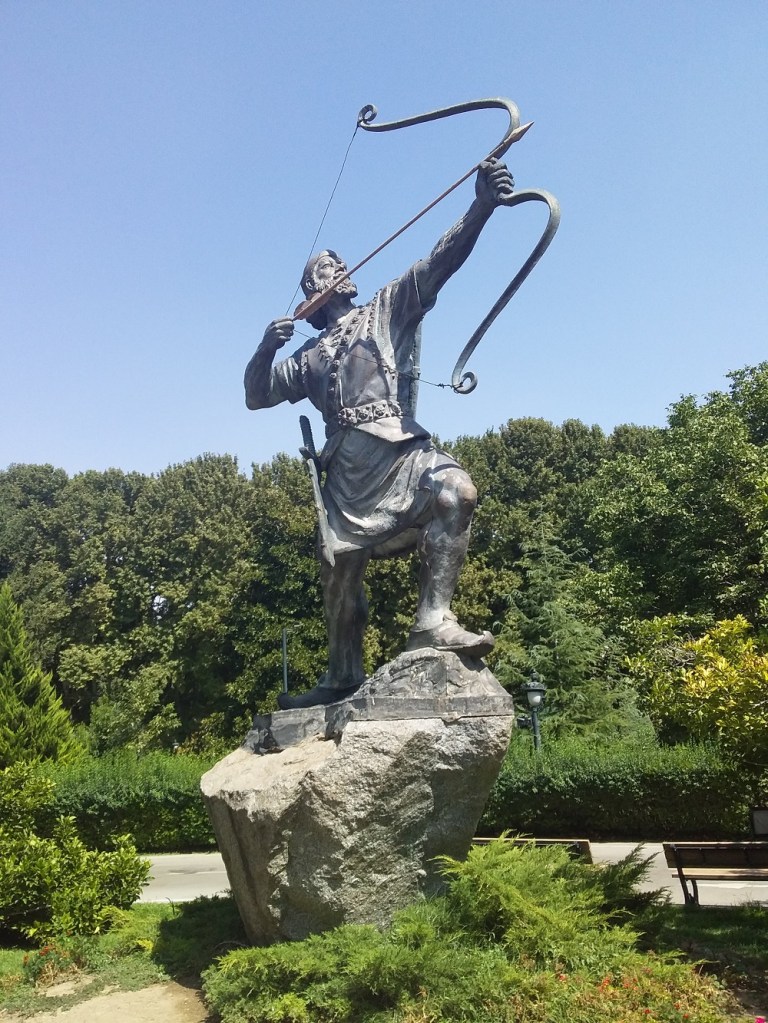
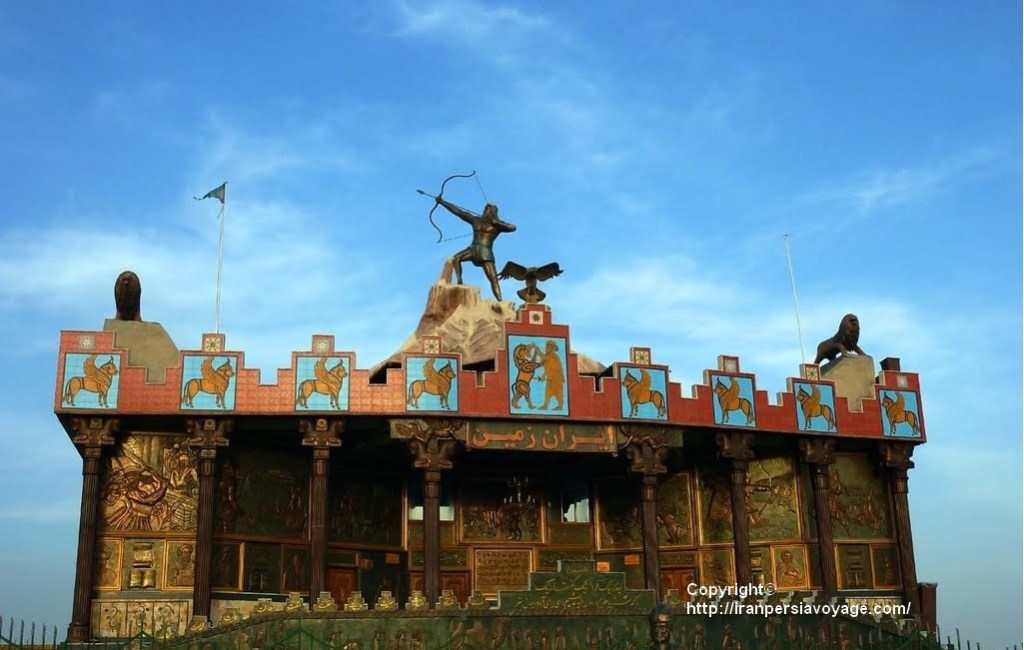
Tirgan, la célébration de l’été, Arash l’Archer, 4 juillet
Chez les Iraniens, chaque saison, chaque événement naturel fait l’objet d’une célébration. Alors que la douce période estivale ne fait que commencer, venez découvrir la fête de Tirgan : cet ancien festival iranien qui marque les beaux jours est célébré chaque année le 13 du mois du Tir selon le calendrier persan, ce qui revient au 2, 3 ou 4 juillet.
Elle est célébrée dans diverses régions de l’Iran, comme Mazenderan, Khorasan et Arak mais aussi au-delà des frontières iraniennes.
Aux origines de Tirgan…
Aux origines, la fête de Tirgan est dédiée à Tishtrya, le dieu zoroastrien des nuages, de l’eau sous toutes ses formes et de la fertilité au service du dieu lumière Ahura Mazda.
Tishtrya est en conflit permanent avec Apaosha, le démon de la sécheresse.
Au bord de la défaite, Tishtrya demande de l’aide à Ahura Mazda grâce à qui il sort victorieux, la pluie tombant enfin sur la terre.
Plus tard, le héros mythique, on choisit l’archer Arash pour régler un différend foncier entre les dirigeants de l’ancien Iran (Manouchehr) et Turan (Afrasiyab) luttant contre la sécheresse.
Le 13ème jour du mois de Tir, à la demande de Tishtriya, Arash tire une flèche depuis le sommet du Mont Damavand afin de déterminer la frontière entre les deux royaumes selon l’endroit où elle atterrit.
Arash donne toutes ses forces pour tirer la flèche, qui vole pendant deux jours pour ensuite tomber aux abords de la rivière Amu Darya.
Lorsque que la flèche s’enfonça dans le sol, la pluie se mit à tomber sur les deux pays et une paix durable se forma entre eux… au prix de la vie d’Arash. Tirgan célèbre donc aussi la mémoire de cet archer héroïque.
Comment se fête Tirgan ?
Tirgan se célèbre en éclaboussant de l’eau, en dansant, en récitant de la poésie et en servant des plats traditionnels, tels que la soupe aux épinards et le sholeh zard, un pudding de riz au safran.
On s’amuse aussi à attacher aux poignets des bandes aux couleurs de l’arc-en-ciel, que l’on porte pendant dix jours avant de les jeter dans un ruisseau.
https://www.paris-perse.com/post/tirgan-la-c%C3%A9l%C3%A9bration-de-l-%C3%A9t%C3%A9
Photos: Dans quelques provinces d’Iran, on peut voir des statues modernes d’Arash avec son arche.
✍ENGLISH
Tirgan Summer festival 4th July, Arash the Archer
Tirgan is the fourth ancient Iranian Festival of seasons, alongside Norouz (Spring), Yalda (Winter) and Mehregan (Autumn). This year it is celebrated on Sunday 4th July.
Over the centuries, the significance of some of these ancient festivals has dwindled. The 10th century polymath Biruni highlighted the various ones incuding Norouz, Yalda, Tirgan, Mehregan and others such as Sadeh, the six Gahambars, Farvardigan, Bahmanja, Esfand Armaz and more. Norouz is largely considered the most important and is still celebrated throughout the world.
Tirgan is the ancient Summer festival dedicated to a healthy harvest and lack of drought. It is celebrated by dancing, splashing water, the staple of reciting poetry, and consuming various traditional foods. For the young, there is a custom of tying rainbow-colored bands on wrists. These are worn for ten days and then thrown into a stream, accompanied by a wish.
Many Zoroastrians still tie this ribbon around their wrists for ten days, then toss the ribbons into a stream on the day of Tirgan.
Mythology
The celebration itself is likely to arise from Pre-Zoroastrian times, nevertheless Zoroastrians and subsequently other faiths in Iran (Muslims, Christians, Jews, Baháʼis and others) would continue celebrating this day which is linked to the deity Tishtrya, a sky archangel who heralds the coming of rain with thunder and lightning. Tishtrya is regularly locked in combat with Apaosha, the demon of drought. On the verge of loss, Tishtrya asked the Supreme God Ahura Mazda for assistance and emerged victorious, with rain pouring over the land.
Later, the mythical hero Arash the Archer was chosen to settle a land dispute between the leaders of ancient Iran (Manouchehr) and Turan (Afrasiyab), with the latter’s nation struggling due to drought. He was asked by Tishtrya to shoot an arrow from the highest peak of Iran — the volcano Mount Damavand, and where it landed would form the border of the two kingdoms. Arash put all his effort into shooting the arrow, which flew for two days and fell next to the Amu Darya River. Sadly he died as a result, but when the arrow fell, rain poured onto both countries and a long-lasting peace formed between them. The festival is therefore also in remembrance of this heroic archer.
Now, water and rain is an important part of the celebration, indeed celebrating and spring or source of water is part of the custom. Splashing water on each other, or “Ab Pashi”, is part of the day.
A ladies-only custom is Fal-e Koozeh, in which a girl is chosen to carry a jar which is filled with water and subsequently other small objects. This is secured under a tree until the day of Tirgan. After Ab-Pashi, the girl takes out the objects whilst elders are singing, and omens attributed to each one.
Food and Drink
Traditional foods for Tirgan include Shol-e-zard, a saffron-infused rice pudding and Aash Reshteh
Shol-e-zard is the traditional sweet desert made for Tirgan. It is made by rice cooked with water, and flavoured with saffron, rosewater, cinnamon, sugar, cardamom and butter. Usually it is decorated with pistachios, rosebuds, almonds and cinnamon.
Ash Reshteh — a dense and wholesome soup made of beans, herbs, lentils, spinach, turmeric, Persian noodles and covered in “kashk” — a preserve made of wheat mixed with sour yoghurt.
https://medium.com/doctoryak/happy-tirgan-the-mid-summer-ancient-festival-of-iran-83e680a14b80
Photos: In some provinces of Iran, we can see modern statues of Arash with his arch.
─────
➡️ Histoire de l’Iran et Islam / Iran and Islam
https://iranpersiavoyage.wordpress.com/histoire-de-liran-et-islam/
➡️ UNESCO Iran Caravansérails / Caravanserais
https://iranpersiavoyage.wordpress.com/unesco-iran-caravanserails/
─────
IranPersiaVoyage
─────
 Iran Persia Voyage