SUJETS:
-Le 21 mars, c’est le Nouvel An iranien/persan (Norooz).
-Norooz a de profonde tradition dans les religions iraniennes, telles que le Mithraïsme et le Zoroastrisme. Mais pas que..
-De nos jours en dehors de l’Iran, Norooz est célébré par plus de 300 millions de personnes dans le monde.
-Lion et le taureau sur les murs de Persépolis à Shiraz en Iran.
-En Iran pendant les vacances de Norooz.
-Un coup d’œil des diverses décorations de Norooz dans plusieurs villes d’Iran de diverses années.
-Décorations des diverses tables de Norooz dans plusieurs villes d’Iran de diverses années.
-En 2023, Norooz a fait son entrée chez Mickey Mouse.
(✍ENGLISH text is always below the French text)
TOPICS:
-March 21 is the Iranian/Persian New Year (Norooz).
-Norooz has a deep tradition in Iranian religions, such as Mithraism and Zoroastrianism. But that’s not all..
-Today, outside Iran, Norooz is celebrated by over 300 million people worldwide.
-Lion and the bull on the walls of Persepolis in Shiraz, Iran.
-In Iran during the Norooz vacations.
-A look at the various Norooz decorations in several Iranian cities from different years.
-Decorations of various Norooz tables in several Iranian cities of various years.
-In 2023, Norooz was introduced by Mickey Mouse
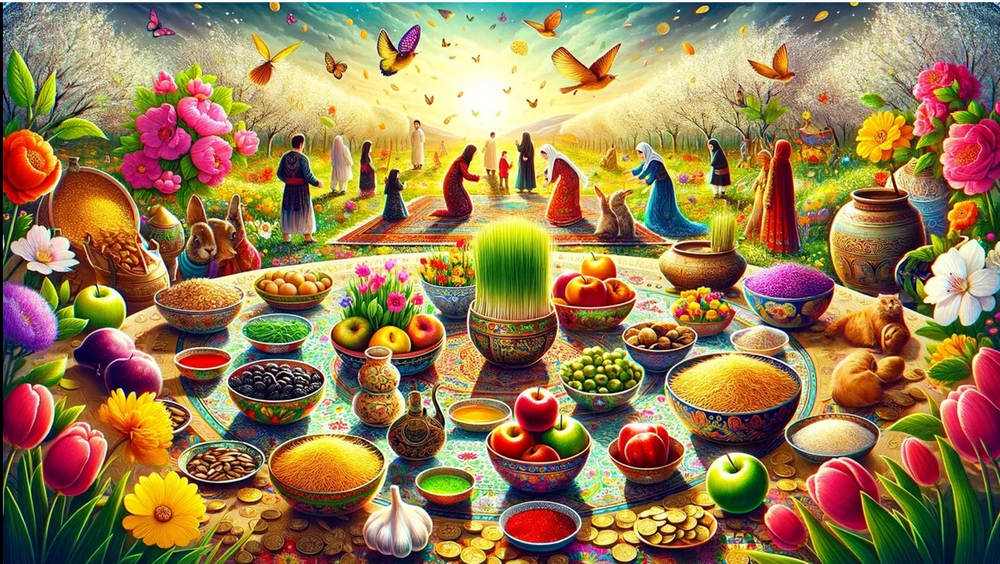
Le 21 mars, c’est le Nouvel An iranien/persan (Norooz). En persan « Norooz » signifie « nouveau jour ».
Avant que le terme Norooz soit utilisé pour marquer le Nouvel An, les anciens Iraniens appelaient cette fête « Navasarda », qui signifie « Nouvel An » en vieux persan.
L’Assemblée générale de l’ONU en 2010 a reconnu la Journée internationale de Norooz, la décrivant comme une fête printanière d’origine perse célébrée depuis plus de 3 000 ans.
Norooz a été officiellement inscrit sur la liste de l’UNESCO du patrimoine culturel immatériel de l’humanité depuis le 30 septembre 2009.
La célébration de l’équinoxe vernal commence avec le début du printemps entre les 20 et 22 mars qui marque la traversée de l’équateur par le soleil et le début du printemps dans l’hémisphère nord.
Depuis la nuit des temps, les anciennes tribus du Mont Zagros et du Plateau iranien célébraient les changements de saisons avec des veillées pour fêter le lever du soleil.
Les célébrations célestes et de la nature sont les bases du calendrier persan.
Photo: Festival annuel de Nowruz
https://christmasinfairfax.com/event/the-10th-annual-nowruz-festival/
-Equinoxe de printemps 2024
https://icalendrier.fr/outils/equinoxes-solstices
-Journée internationale du Novruz 21 mars
https://www.un.org/fr/observances/international-nowruz-day
-Les Nations Unies ont célébré cette année pour la première fois la Journée internationale de Norouz, fête d’origine persane marquant le premier jour du printemps dans plusieurs communautés des Balkans, du Caucase, d’Asie centrale et du Moyen-Orient.
https://news.un.org/fr/story/2010/03/180292
-Journée internationale de Nowruz
https://www.unesco.org/fr/international-day-nowruz
*
✍ENGLISH
March 21 is the Iranian/Persian New Year (Norooz). In Persian, « Norooz » means » New day ».
Before the term Norooz was used to mark the New Year, ancient Iranians called the holiday « Navasarda », which means « New Year » in Old Persian.
The UN General Assembly in 2010 recognized the International Day of Norooz, describing it as a spring festival of Persian origin that has been celebrated for over 3,000 years.
Norooz was officially inscribed on the UNESCO list of Intangible Cultural Heritage of Humanity on September 30, 2009.
The celebration of the vernal equinox begins with the start of spring between March 20 and 22, which marks the sun’s crossing of the equator and the beginning of spring in the northern hemisphere.
Since time immemorial, the ancient tribes of Mount Zagros and the Iranian Plateau have celebrated the changing of the seasons with sunrise feasts.
Celestial and nature celebrations are the basis of the Persian calendar.
Photo: Annual Nowruz Festival
https://christmasinfairfax.com/event/the-10th-annual-nowruz-festival/
-The March Equinox 2024
https://www.timeanddate.com/calendar/march-equinox.html
-International Nowruz Day 21 March
https://www.un.org/en/observances/international-nowruz-day
-General Assembly Recognizes 21 March as International Day of Nowruz
The General Assembly this afternoon recognized the International Day of Nowruz, a spring festival of Persian origin.
https://press.un.org/en/2010/ga10916.doc.htm
-International Day of Nowruz
https://www.unesco.org/en/international-day-nowruz
-Nowruz: A New Day for Humanity
https://nowruzcommission.org/history-of-nowruz/
─────

Norooz a de profonde tradition dans les religions iraniennes, telles que le Mithraïsme et le Zoroastrisme.
Mais pas que..
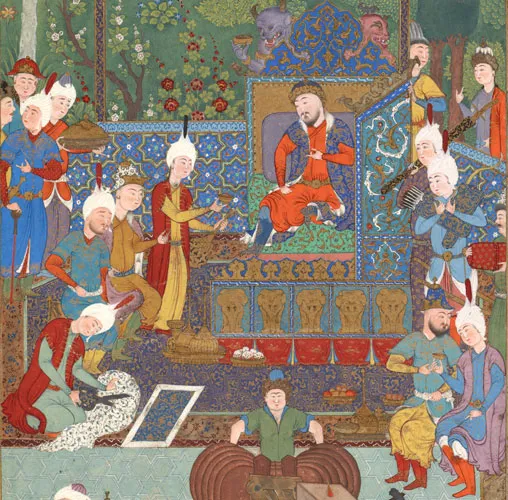
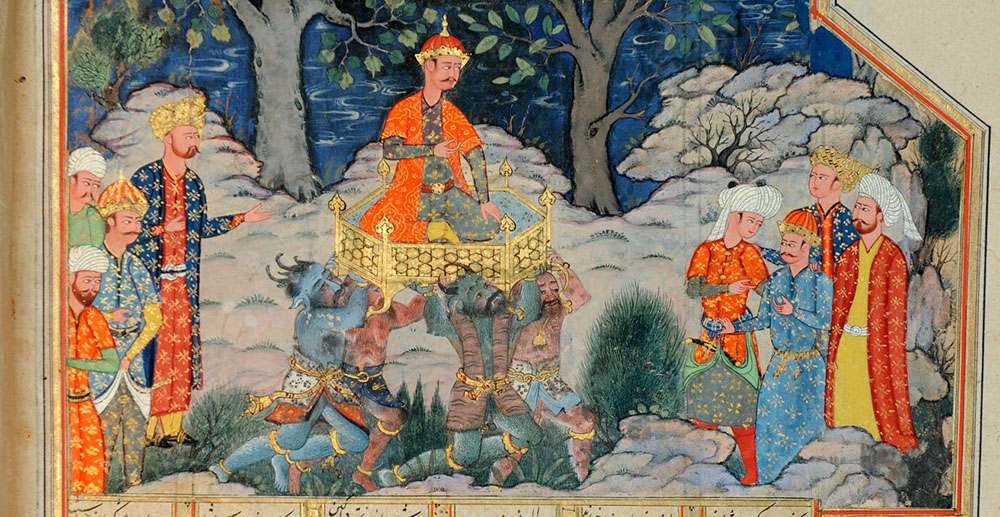
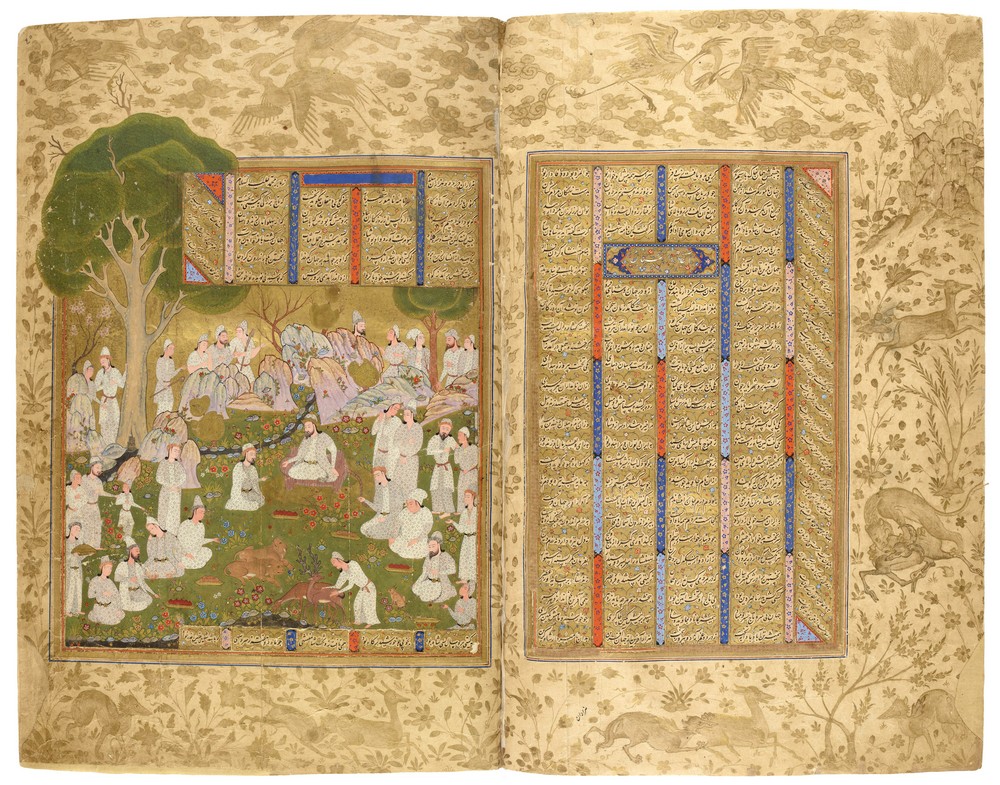
Selon Shahnameh (Le Livre des Rois) écrit par le fameux poète persan Ferdowsi vers l’an 1000 de notre ère, retrace l’épopée de l’Iran depuis la création du monde jusqu’à l’arrivée de l’Islam,
en plus de 60 000 distiques écrits, attribue la fondation de Norooz au mythique roi iranien Jamshid de l’époque des Pishdadiens vers 4300 av. J.-C., qui a sauvé l’humanité d’un hiver destiné à tuer toute créature vivante.
Ça sera le premier jour de Farvardin, qui est le premier mois du calendrier persan.
Jamshid est également appelé le Roi du Soleil. La célébration de Norooz dans la tradition ancienne est étroitement liée aux symboles de la renaissance et de la résurrection.
-Photo:
Jamshid sur son trône porté par des divs (démons). Détail d’une illustration tirée d’un manuscrit du Shāhnameh (Royal Collection Trust)
Peinture à l’aquarelle opaque avec des peintures métallisées. Firdawsi (940-1020) (auteur)
Provenance
On pense qu’il a été pris du palais de Tipu Sultan à Seringapatam en 1799. Offert à George IV par le marquis de Hastings, vers 1823.
https://www.rct.uk/collection/1005013-a/jamshid-on-his-throne-carried-by-divs-demons
-Photo:
La Cour de Jamshid
Aquarelle opaque, encre et or sur papier, années 1520, Iran, Tabriz, période Safavid.
Le roi Jamshid, qui a régné pendant trois cents ans, inaugure le premier âge d’or de l’histoire de l’Iran. Il présente à son peuple les sciences, la médecine, les arts et l’artisanat, et il établit Now-ruz (Nouveau Jour) le premier jour de Farvardin (21 mars), lorsqu’il se repose enfin de ses efforts. Bientôt, cependant, Jamshid devient de plus en plus arrogant à propos de ses réalisations et se considère meilleur que tout le monde, même Dieu. Son orgueil lui fait finalement perdre sa gloire divine (farr), un attribut essentiel de la royauté perse, et il est tué par le maléfique Zahhak.
Dans cette composition, Jamshid, vêtu d’un somptueux costume du XVIe siècle, est flanqué de deux démons alors qu’il préside une cour animée, où les hommes tissent de la soie, coupent des tissus, scient du bois et forgent du fer avec d’énormes soufflets. Les surfaces richement détaillées et la végétation exubérante semblent résonner avec l’excitation des réalisations de Jamshid.
Le tableau appartient à la copie la plus célèbre du Shahnama, achevée pour le souverain safavide Shah Tahmasp (règne 1524-76). Les 258 folios illustrés du manuscrit incarnent les idéaux de la peinture manuscrite persane, comme on le voit ici dans l’accent mis sur une composition méticuleusement équilibrée, des surfaces semblables à des bijoux et un superbe dessin.
https://asia-archive.si.edu/learn/shahnama/els2010-7-1/
-Photo:
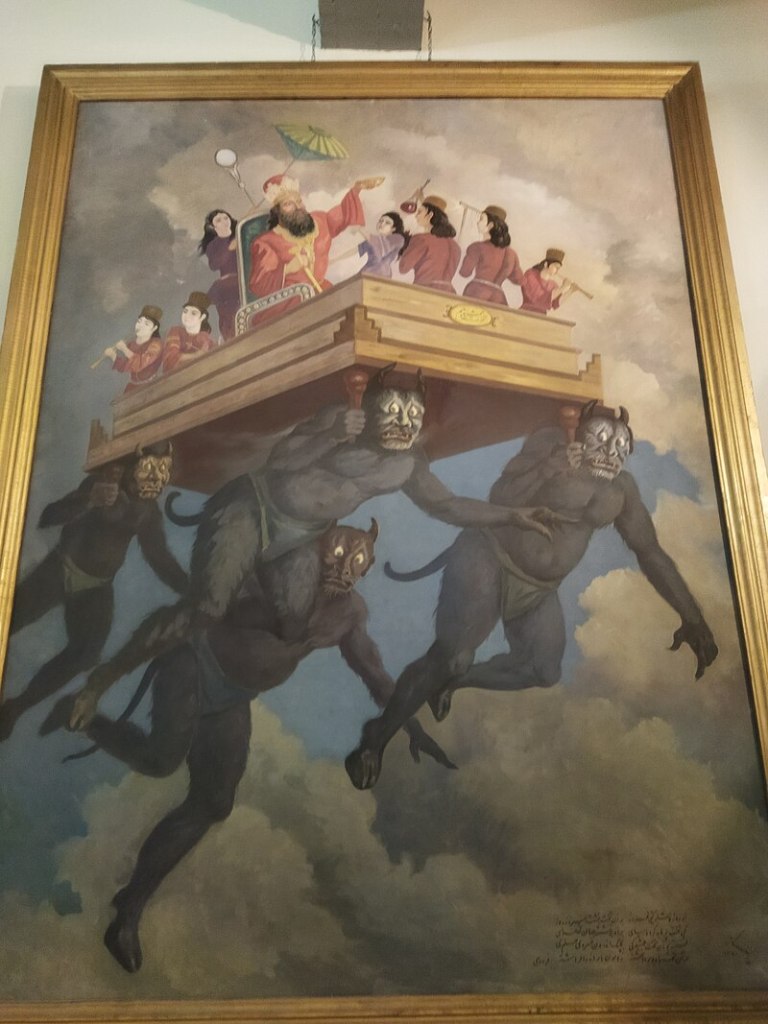
Tableau, Jamshid sur son trône porté par des démons. Exposé dans le mausolée de Ferdowsi à Tus Mashhad, Iran.
https://fa.wikipedia.org/wiki/%D8%AC%D9%85%D8%B4%DB%8C%D8%AF#/media/%D9%BE%D8%B1%D9%88%D9%86%D8%AF%D9%87:Tomb_of_Ferdowsi,_Tus,_Mashhad,_Iran_(9).jpg
-Photo:
Carte de Shahnameh Ferdowsi
ÉVEILLEZ LA CURIOSITÉ ET L’IMAGINATION AVEC UNE RANDONNÉE À TRAVERS LES TERRES RÉELLES ET MYTHIQUES DE SHAHNAMEH.
Cette belle impression est un rendu artistique représentant le monde de Shahnameh. L’artiste Hamid Rahmanian propose une visite visuelle des terres d’Iran, du Turan et d’ailleurs.
https://www.kingorama.com/shahnameh-map
-Photo:
Gayûmars et son peuple. Ferdowsi, Le Livre des rois (Shâh Nâmeh)
https://essentiels.bnf.fr/fr/image/a1a42160-0bd2-4104-a1d4-018aaf0e28ad-gayumars-et-son-peuple
-Shanamêh, le livre des rois Iranien
https://www.graal-initiation.org/Shanameh-le-livre-des-rois-Iranien.html
-Estampes Shahnameh
Cette édition limitée d’estampes de qualité muséale tirées du livre Shahnameh : The Epic of the Persian Kings a déjà été achetée par des musées et des galeries internationaux ainsi que par des collectionneurs privés.
Chaque tirage est signé par Hamid Rahmanian et contient le sceau du projet Shahnameh spécialement conçu.
https://www.kingorama.com/shahnameh-prints
-Jamshid, le roi iranien
https://miladlh.com/fr/jamshid-le-roi-iranien/
-Gayûmars et son peuple
Ferdowsi, Le Livre des rois (Shâh Nâmeh)
Dans l’Avesta, le livre sacré des Zoroastriens composé vers 1100 avant J.-C., Gayûmars est le premier homme. Dans le Shâhnâmeh, il est aussi le premier roi légendaire d’Iran.
Sous son règne, qui débute un jour de printemps, les hommes vivent en paix avec les animaux sauvages qu’ils commencent à domestiquer. Les temps sont idylliques jusqu’à ce que le démon Ahriman complote contre lui et introduise le mal dans un monde jusque-là innocent.
La miniature, qui est souvent l’une des premières illustrations des manuscrits du Shâhnâmeh, se détache sur une page aux marges décorées de plantes et d’animaux dorés.
Assis sur un trône fait d’une peau de tigre, Gayûmars siège au milieu de sa cour dans la montagne. Lui et ses gens, les vêtements taillés dans des peaux de léopard, vivent en parfaite harmonie avec les bêtes sauvages, dans une nature paradisiaque. Des ruisseaux serpentent au milieu des rochers, faisant naître tout autour des buissons de fleurs. Une femme caresse un cerf et sa biche tandis qu’à deux pas, un couple de lions est couché. Seul détail anachronique, des plats de grenades et de coings sont disposés sur le sol. Un arbre majestueux dont les vertes frondaisons se déploient en dehors du cadre domine la scène. À ses pieds, deux arbustes, l’un fleuri l’autre aux branches desséchées, symbolisent la vie et la mort. L’or et le blanc triomphent, concourant à créer un sentiment de beauté et de pureté. Le texte est copié sur plusieurs colonnes, comme il sied pour la poésie.
https://essentiels.bnf.fr/fr/image/a1a42160-0bd2-4104-a1d4-018aaf0e28ad-gayumars-et-son-peuple
-La cour de Gayumarth – David Collection Copenhagen
https://commons.wikimedia.org/wiki/Category:The_Court_of_Gayumarth_-_David_Collection_-_56/2007
-Dynastie des Pishdadiens
https://www.eranshahr.com/shahnameh/pishdadian
-Un tout premier calendrier (connu) remonterait à la dynastie PISHDAADI sous le règne de de son quatrième roi JAMSHEED le Grand. Nous sommes alors en 4300 av. J.-C environ.
Ce calendrier que nous allons qualifier de « Vieil Avestan » était solaire et se caractérisait par une année de 12 mois de 30 jours plus cinq jours. Ces cinq jours n’étaient pas rajoutés chaque année mais faisaient l’objet d’un regroupement pour constituer un mois complémentaire tous les 116 ans.
PAR: CALENDRIERS SAGA
https://icalendrier.fr/calendriers-saga/calendriers/perse
*
✍ENGLISH
Norooz has a deep tradition in Iranian religions, such as Mithraism and Zoroastrianism.
But that’s not all.
According to Shahnameh (The Book of Kings), written by the famous Persian poet Ferdowsi around 1000 CE, traces the epic of Iran from the creation of the world to the arrival of Islam,
in over 60,000 written couplets, attributes the founding of Norooz to the mythical Iranian king Jamshid of the Pishdadian era around 4300 BC, who saved mankind from a winter destined to kill every living creature.
It will be the first day of Farvardin, which is the first month of the Persian calendar.
Jamshid is also called the Sun King. The celebration of Norooz in ancient tradition is closely linked to the symbols of rebirth and resurrection.
-Photo:
Jamshid on his throne carried by divs (demons)
Painting in opaque watercolour with metallic paints. Firdawsi (940-1020) (author)
Provenance
Thought to have been taken from Tipu Sultan’s palace at Seringapatam in 1799. Presented to George IV by the Marquess of Hastings, c.1823.
https://www.rct.uk/collection/1005013-a/jamshid-on-his-throne-carried-by-divs-demons
-Photo:
The Court of Jamshid
Opaque watercolor, ink, and gold on paper, Iran, Tabriz, Safavid period, 1520s.
King Jamshid, who ruled for three hundred years, ushers in the first golden age in Iran’s history. He introduces to his people the sciences, medicine, and the arts and crafts, and he establishes Now-ruz (New Day) on the first of Farvardin (21 March), when he finally rests from his endeavors. Soon, however, Jamshid becomes increasingly arrogant about his achievements and considers himself better than everyone, even God. His hubris eventually causes him to lose his divine glory (farr), an essential attribute of Persian kingship, and he is killed by the evil Zahhak.
In this composition, Jamshid, dressed in sumptuous sixteenth-century attire, is flanked by two demons as he presides over a bustling court, where men weave silk, cut cloth, saw wood, and forge iron with huge bellows. The richly detailed surfaces and exuberant vegetation seem to reverberate with the excitement of Jamshid’s accomplishments.
The painting belongs to the most celebrated copy of the Shahnama, completed for the Safavid ruler Shah Tahmasp (reigned 1524-76). The manuscript’s 258 illustrated folios embody the ideals of Persian manuscript painting, as seen here in the emphasis on a meticulously balanced composition, jewel-like surfaces, and superb draftsmanship.
https://asia-archive.si.edu/learn/shahnama/els2010-7-1/
-Photo:
Painting, Jamshid on his throne carried by demons. Exhibited in the Ferdowsi mausoleum in Tus Mashhad, Iran.
https://fa.wikipedia.org/wiki/%D8%AC%D9%85%D8%B4%DB%8C%D8%AF#/media/%D9%BE%D8%B1%D9%88%D9%86%D8%AF%D9%87:Tomb_of_Ferdowsi,Tus,_Mashhad,_Iran(9).jpg
-Photo:
-Shahnameh Ferdowsi Map
SPARK CURIOSITY AND IMAGINATION WITH A TREK THROUGH THE REAL AND MYTHICAL LANDS OF SHAHNAMEH.
This beautiful print is an artistic rendering depicting the world of Shahnameh. Artist Hamid Rahmanian provides a visual tour of the lands of Iran, Turan and beyond.
https://www.kingorama.com/shahnameh-map
-Photo:
Gayûmars and his people. Ferdowsi, The Book of Kings (Shah Nameh)
https://essentiels.bnf.fr/fr/image/a1a42160-0bd2-4104-a1d4-018aaf0e28ad-gayumars-et-son-peuple
-Shahnama: 1000 Years of the Persian Book of Kings
https://asia-archive.si.edu/learn/shahnama/
-Shahanmeh – All Episodes
https://www.princeton.edu/~shahnama/allep.htm
-Shahnameh Prints
This limited edition of museum-quality prints from the book, Shahnameh: The Epic of the Persian Kings have already been purchased by international museums and galleries and private collectors.
Each print is signed by Hamid Rahmanian and contains the specially designed Shahnameh Project seal.
https://www.kingorama.com/shahnameh-prints
-JAMŠID i. Myth of Jamšid
https://iranicaonline.org/articles/jamsid-i
-Gayûmars and his people
Ferdowsi, The Book of Kings (Shah Nameh)
In the Avesta, the sacred book of the Zoroastrians composed around 1100 B.C., Gayûmars is the first man. In the Shahnameh, he is also the first legendary king of Iran. Under his reign, which began on a spring day, men lived in peace with the wild animals they began to domesticate. Times are idyllic until the demon Ahriman plots against him and brings evil to a hitherto innocent world.
The miniature, which is often one of the earliest illustrations in the manuscripts of the Shâhnâmeh, stands out on a page with margins decorated with gilded plants and animals.
Seated on a throne made of a tiger’s skin, Gayûmars sits in the middle of his court in the mountains. He and his people, their clothes cut from leopard skins, live in perfect harmony with the wild beasts, in a paradisiacal nature. Streams meander through the rocks, giving rise to flower bushes all around. A woman caresses a stag and its doe while a couple of lions lie a stone’s throw away. The only anachronistic detail is that dishes of pomegranates and quinces are laid out on the floor. A majestic tree whose green foliage spreads out outside the frame dominates the scene. At its feet, two shrubs, one flowering the other with withered branches, symbolize life and death. Gold and white triumph, helping to create a sense of beauty and purity. The text is copied in several columns, as befits poetry.
https://essentiels.bnf.fr/fr/image/a1a42160-0bd2-4104-a1d4-018aaf0e28ad-gayumars-et-son-peuple
-GAYŌMART
https://www.iranicaonline.org/articles/gayomart-
-The Court of Gayumarth – David Collection Copenhagen
https://commons.wikimedia.org/wiki/Category:The_Court_of_Gayumarth_-David_Collection-_56/2007
-Pishdadian Dynasty
https://www.eranshahr.com/shahnameh/pishdadian
-A very first (known) calendar dates back to the PISHDAADI dynasty under the reign of its fourth king JAMSHEED the Great. We are then in 4300 BC. approximately.
https://icalendrier.fr/calendriers-saga/calendriers/perse
─────
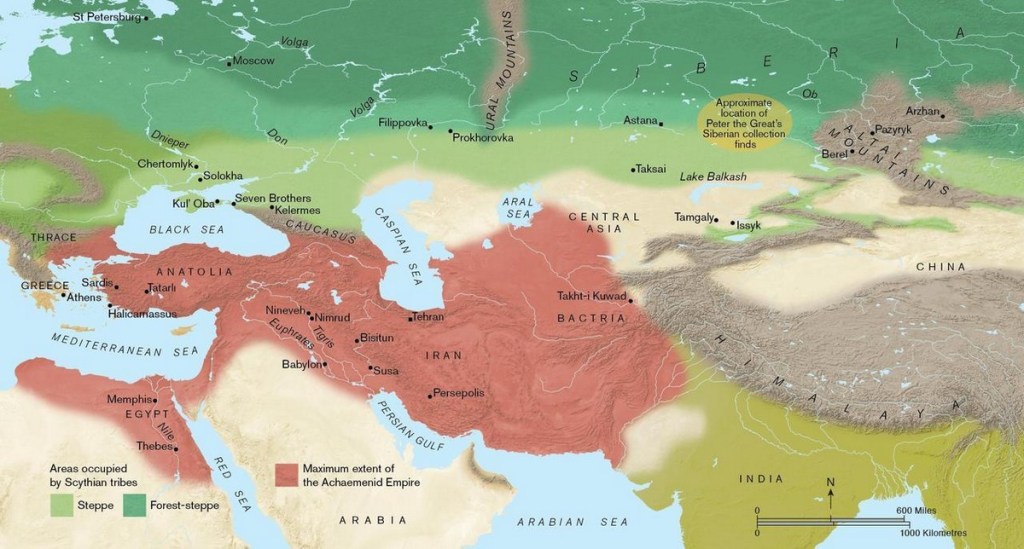


De nos jours en dehors de l’Iran, Norooz est célébré par plus de 300 millions de personnes dans le monde.
S’il y a autant de peuples dans divers pays qui célèbrent Norooz, c’est par le fait que nombreux de ses zones ont été des anciens territoires iraniens et pour d’autres ont été sous l’influence culturelle iranienne, pendant l’Empire Perse jusqu’à la période du Grand Iran, dont l’héritage du monde iranien survit jusqu’à nos jours.
Sans oublier la diaspora iranienne/persanne dans différents pays du monde qui célèbre aussi Norooz.
(L’orthographe de Norooz et sa prononciation diffèrent selon les pays).
-Photo:
Carte de l’Empire Achéménide (559 – 330 av. J.-C.)
https://mapsontheweb.zoom-maps.com/post/170975414491/map-of-achaemenid-empire
-Photo:
Le Grand Iran
https://fr.wikipedia.org/wiki/Monde_iranien
-Photo:
Norooz dans le monde
-Le Norouz à l’époque préislamique
https://www.kavehfarrokh.com/uncategorized/nowruz-in-the-pre-islamic-era/
-NOWRUZ i. Période préislamique
https://www.iranicaonline.org/articles/nowruz-i
*
✍ENGLISH
Today, outside Iran, Norooz is celebrated by over 300 million people worldwide.
The fact that so many people in different countries celebrate Norooz is due to the fact that many of its areas were once Iranian territories and others were under Iranian cultural influence, from the Persian Empire through to the period of Greater Iran, whose legacy of the Iranian world survives to this day.
Not forgetting the Iranian/Persian diaspora in various countries around the world who also celebrate Norooz.
(Norooz is spelled and pronounced differently in different countries).
-Photo:
Map of Achaemenid Empire (550–330 BC)
https://mapsontheweb.zoom-maps.com/post/170975414491/map-of-achaemenid-empire
-Photo:
Greater Iran
https://en.wikipedia.org/wiki/Greater_Iran
-Photo:
Norooz Worldwide
-Nowruz in the Pre-Islamic Era
https://www.kavehfarrokh.com/uncategorized/nowruz-in-the-pre-islamic-era/
-NOWRUZ i. In the Pre-Islamic Period
https://www.iranicaonline.org/articles/nowruz-i
─────
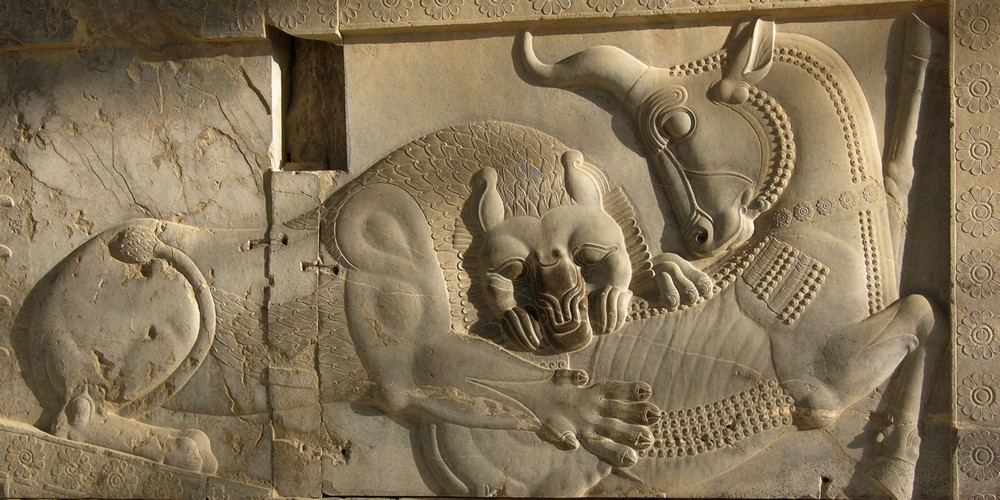
Il est intéressant de savoir que les symboles de Norooz, peuvent aujourd’hui encore être admirés sur les murs de Persépolis à Shiraz en Iran.
Ils sont les témoins de la renaissance et du renouvellement de la Nature. Il s’agit de deux animaux: le lion et le taureau.
Le lion est le symbole de la chaleur et du soleil et le symbole du froid, de la lune et de la nuit, c’est le taureau.
Ces gravures sur les murailles des escaliers du palais de l’Apadana nous montrent la bataille entre un lion et un taureau, dans laquelle c’est le lion qui va vaincre.
La victoire du lion est l’emblème du Norooz et l’arrivée du nouvel an. Sur le reste des gravures figurent des troupes armées rassemblées autour du Roi Achéménide en fêtant la fin du froid et de l’hiver.
-Photo:
Lion et le taureau sur les murs de Persépolis à Shiraz en Iran.
-Persépolis – UNESCO
Fondée par Darius Ier en 518 av. J.-C., Persépolis, capitale de l’Empire achéménide, fut construite sur une immense terrasse mi-naturelle, mi-artificielle où le roi des rois avait édifié un splendide palais aux proportions imposantes, inspiré de modèles mésopotamiens. C’est un site archéologique unique par l’importance et la qualité de ses vestiges monumentaux.
https://whc.unesco.org/fr/list/114/
*
✍ENGLISH
It’s interesting to note that the Norooz symbols can still be appreciated today on the walls of Persepolis in Shiraz, Iran.
They are witnesses of the rebirth and renewal of Nature. Representing in two animals: the lion and the bull.
The lion is the symbol of warmth and the sun, while the bull is the symbol of cold, the moon and the night.
These engravings on the staircase walls of the Apadana palace show a battle between a lion and a bull, in which the lion is victorious.
The lion’s victory is the emblem of Norooz and the arrival of the New Year. The rest of the engravings show armed troops gathered around the Achaemenid king, celebrating the end of cold and winter.
-Photo:
Lion and the bull on the walls of Persepolis in Shiraz, Iran.
-Persepolis – UNESCO
Founded by Darius I in 518 B.C., Persepolis was the capital of the Achaemenid Empire. It was built on an immense half-artificial, half-natural terrace, where the king of kings created an impressive palace complex inspired by Mesopotamian models. The importance and quality of the monumental ruins make it a unique archaeological site.
https://whc.unesco.org/en/list/114/
─────
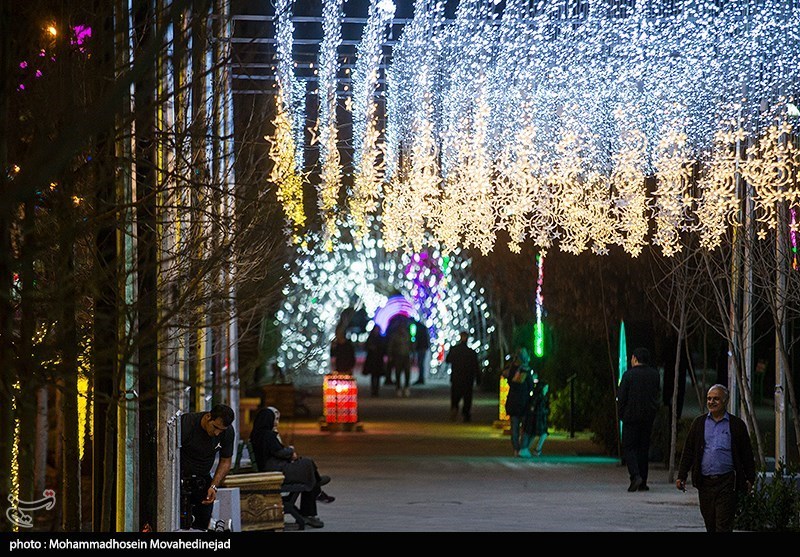
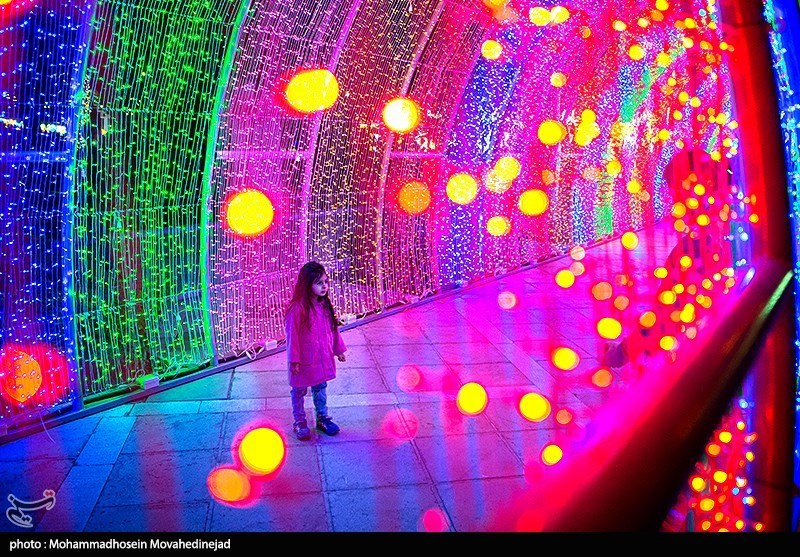
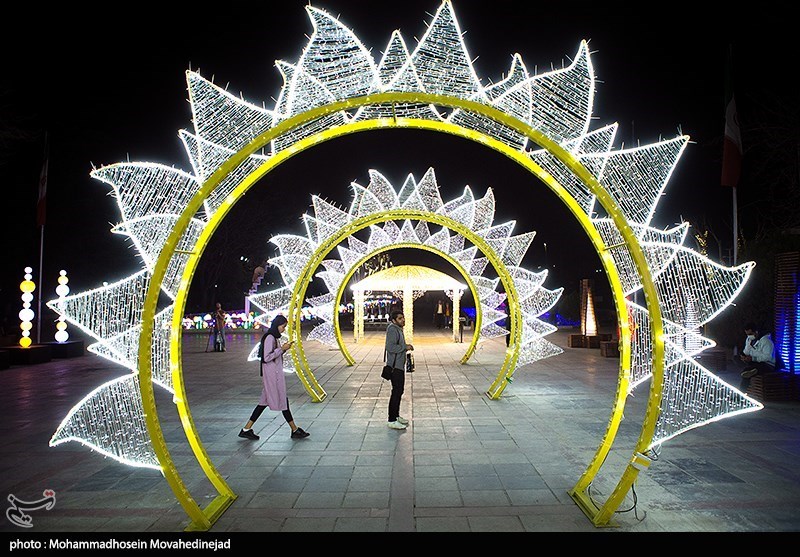
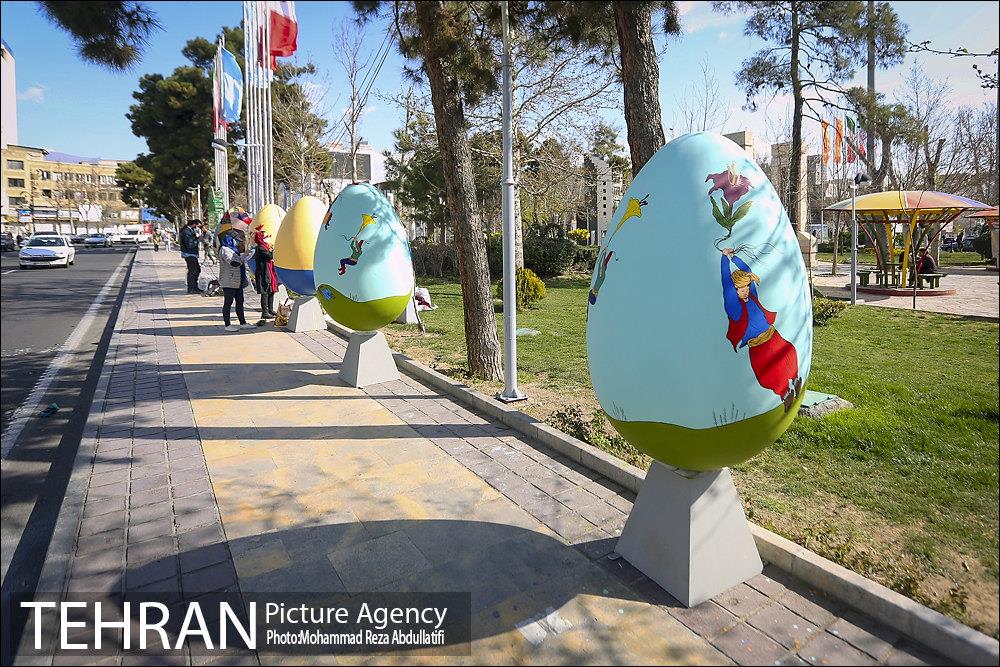
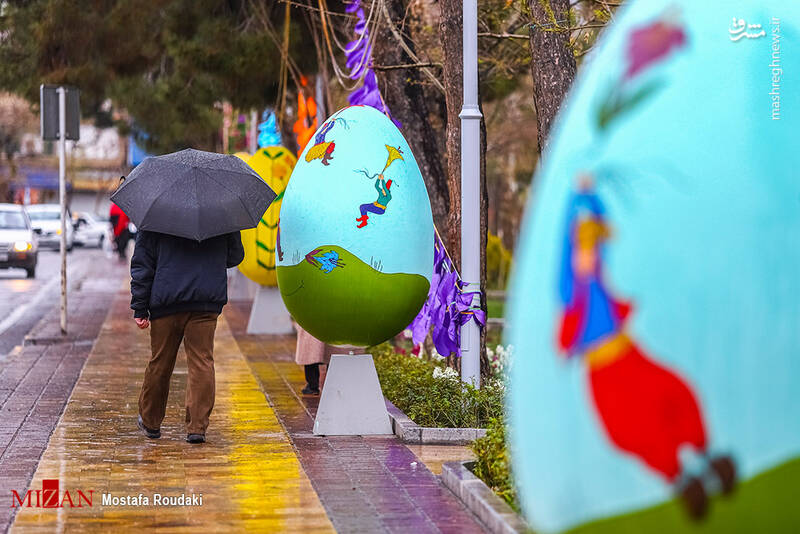
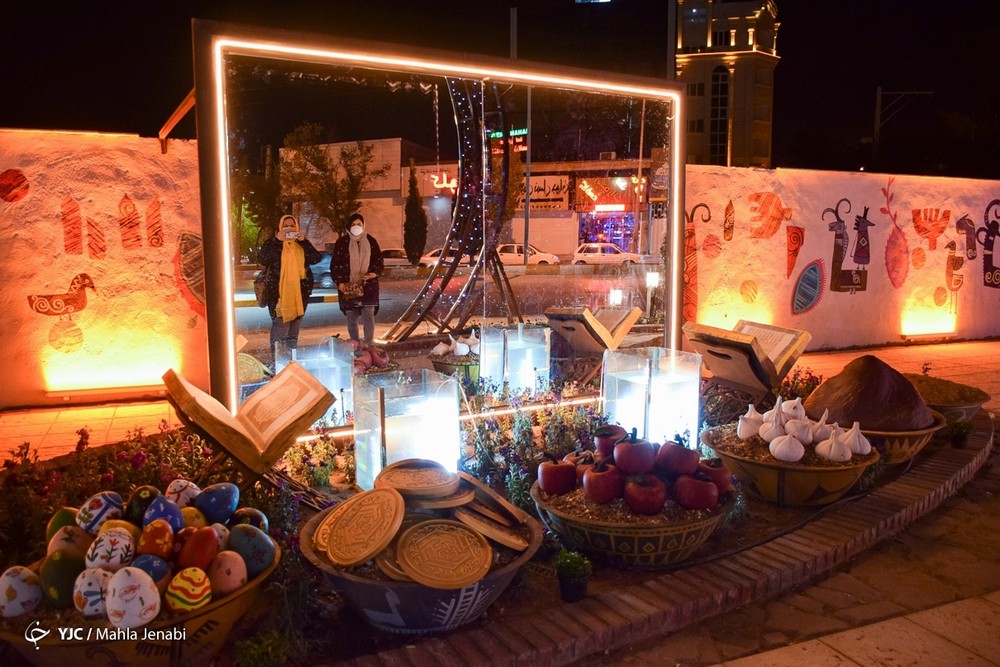
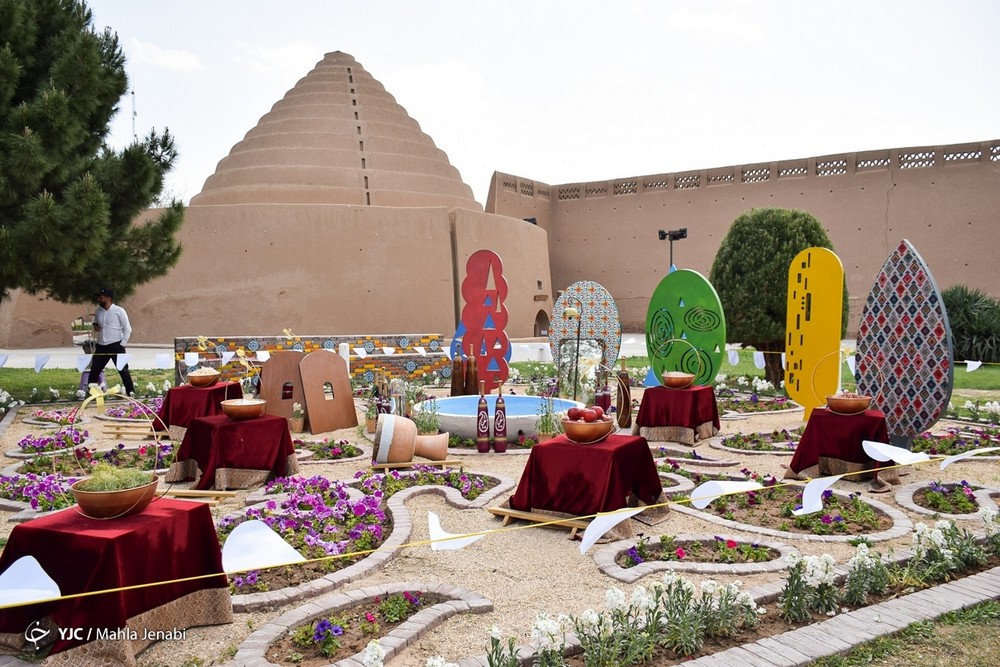
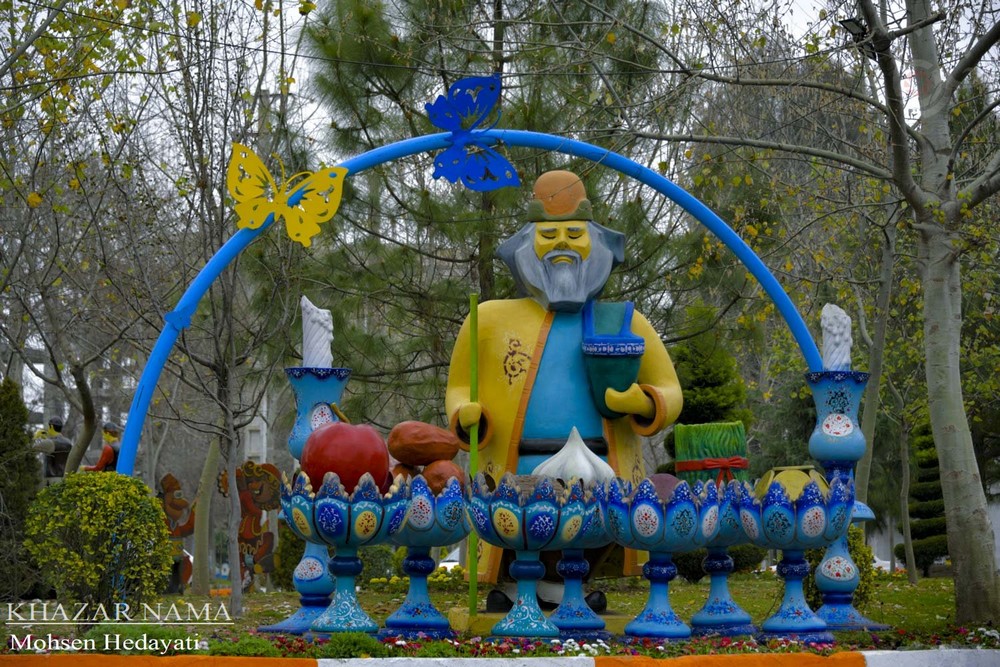
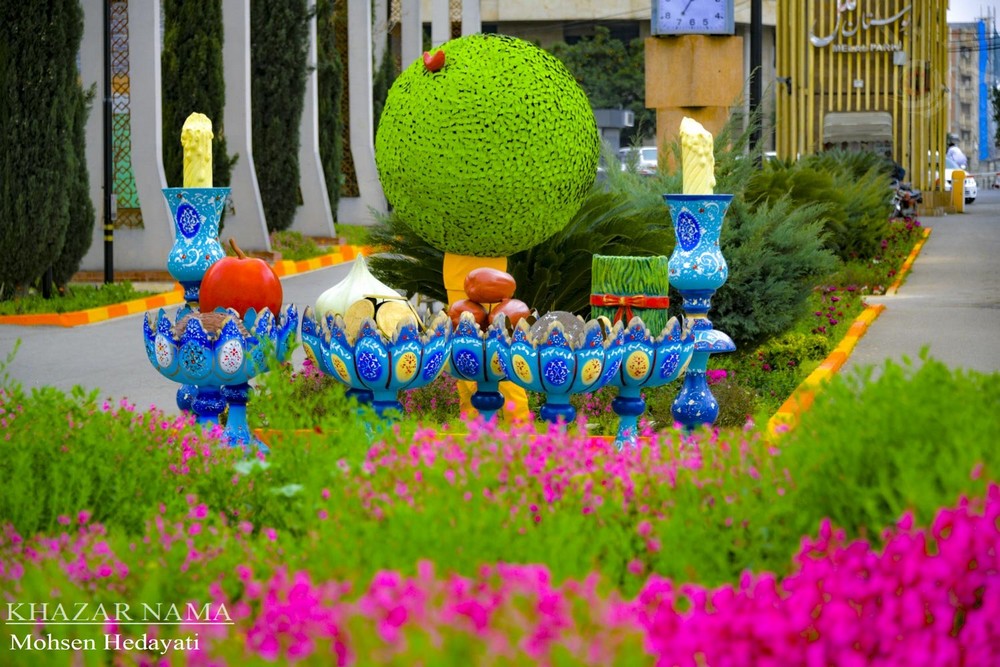
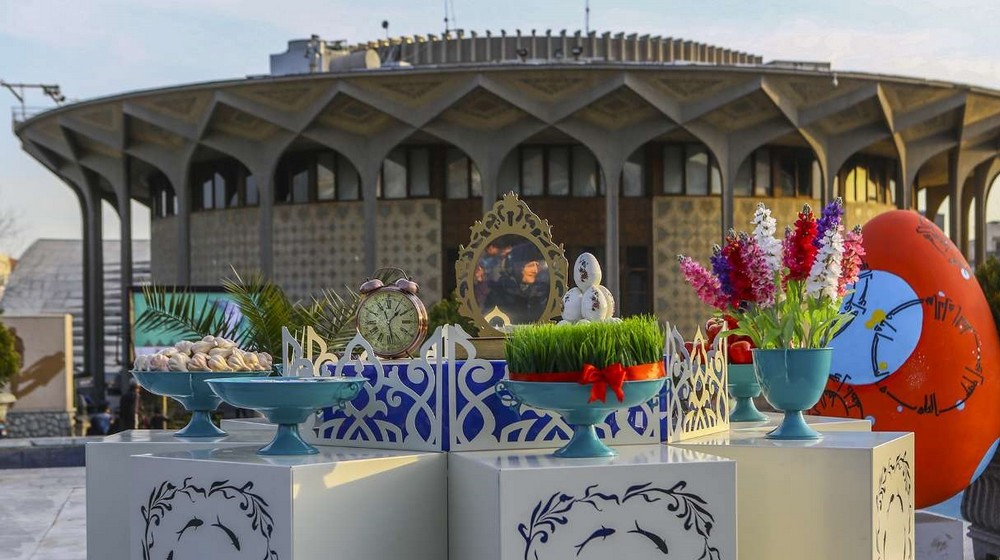
En Iran pendant les vacances de Norooz
Officiellement, les vacances de Norooz est les 4 premiers jours. Cependant, les Iraniens prennent deux semaines entières de vacances.
La plupart des Iraniens passent ces vacances à voyager localement, certaines villes deviennent vite surpeuplées, vous risquez de rencontrer de sérieux problèmes pour trouver des billets pour des destinations populaires ou des hébergements, c’est aussi une période de gros trafique routière.
Il est donc plus judicieux de faire vos réservations et autres avant les vacances de Norooz afin de vous éviter tous tracas inutiles.
Photos:
Un coup d’œil des diverses décorations de Norooz dans plusieurs villes d’Iran de diverses années.
(Les photos viennent des liens en persan)
- https://www.tasnimnews.com/fa/media/1401/12/15/2863905/%D8%A8%D8%B2%D8%B1%DA%AF%D8%AA%D8%B1%DB%8C%D9%86-%D8%AC%D8%B4%D9%86-%D9%86%D9%88%D8%B1-%DA%A9%D8%B4%D9%88%D8%B1?ref=shahrekhabar
- https://www.tehranpicture.ir/fa/album/7173/%D8%AC%D8%B4%D9%86%D9%88%D8%A7%D8%B1%D9%87-%D8%AA%D8%AE%D9%85-%D9%85%D8%B1%D8%BA-%D9%87%D8%A7%DB%8C-%D9%86%D9%88%D8%B1%D9%88%D8%B2%DB%8C
- https://khazarnama.ir/%D8%A7%D9%84%D9%85%D8%A7%D9%86%D9%87%D8%A7-%D9%88-%D9%81%D8%B6%D8%A7%D8%B3%D8%A7%D8%B2%DB%8C-%D9%86%D9%88%D8%B1%D9%88%D8%B2%DB%8C-%D8%AF%D8%B1-%D8%B4%D9%87%D8%B1-%D8%B3%D8%A7%D8%B1%DB%8C/
- http://mod20.ir/makeup/4159/%D8%B9%DA%A9%D8%B3-%D8%B3%D9%81%D8%B1%D9%87-%D9%87%D9%81%D8%AA-%D8%B3%DB%8C%D9%86-%D8%AE%DB%8C%D9%84%DB%8C-%D8%A8%D8%B2%D8%B1%DA%AF-%D9%87%D9%81%D8%AA-%D8%B3%DB%8C%D9%86-%D8%B4%D9%87%D8%B1%DB%8Csofre-haft-sin.html
- https://imentraffic.ir/mag/%D8%A7%D9%84%D9%85%D8%A7%D9%86-%D9%87%D8%A7%DB%8C-%D9%86%D9%88%D8%B1%D9%88%D8%B2%DB%8C/
*
✍ENGLISH
In Iran during the Norooz vacations
Officially, the Norooz vacation is the first 4 days. However, Iranians take two full weeks off.
Most Iranians spend this vacation traveling locally, and some cities quickly become overcrowded. You may encounter serious problems finding tickets to popular destinations or accommodation, and it’s also a busy time for road traffic.
Therefore, it’s better to make your reservations and other arrangements before the Norooz vacations, to avoid any unnecessary inconvenience.
Photos:
A look at the various Norooz decorations in several Iranian cities from different years.
(Photos are from Persian links)
- https://www.tasnimnews.com/fa/media/1401/12/15/2863905/%D8%A8%D8%B2%D8%B1%DA%AF%D8%AA%D8%B1%DB%8C%D9%86-%D8%AC%D8%B4%D9%86-%D9%86%D9%88%D8%B1-%DA%A9%D8%B4%D9%88%D8%B1?ref=shahrekhabar
- https://www.tehranpicture.ir/fa/album/7173/%D8%AC%D8%B4%D9%86%D9%88%D8%A7%D8%B1%D9%87-%D8%AA%D8%AE%D9%85-%D9%85%D8%B1%D8%BA-%D9%87%D8%A7%DB%8C-%D9%86%D9%88%D8%B1%D9%88%D8%B2%DB%8C
- https://khazarnama.ir/%D8%A7%D9%84%D9%85%D8%A7%D9%86%D9%87%D8%A7-%D9%88-%D9%81%D8%B6%D8%A7%D8%B3%D8%A7%D8%B2%DB%8C-%D9%86%D9%88%D8%B1%D9%88%D8%B2%DB%8C-%D8%AF%D8%B1-%D8%B4%D9%87%D8%B1-%D8%B3%D8%A7%D8%B1%DB%8C/
- http://mod20.ir/makeup/4159/%D8%B9%DA%A9%D8%B3-%D8%B3%D9%81%D8%B1%D9%87-%D9%87%D9%81%D8%AA-%D8%B3%DB%8C%D9%86-%D8%AE%DB%8C%D9%84%DB%8C-%D8%A8%D8%B2%D8%B1%DA%AF-%D9%87%D9%81%D8%AA-%D8%B3%DB%8C%D9%86-%D8%B4%D9%87%D8%B1%DB%8Csofre-haft-sin.html
- https://imentraffic.ir/mag/%D8%A7%D9%84%D9%85%D8%A7%D9%86-%D9%87%D8%A7%DB%8C-%D9%86%D9%88%D8%B1%D9%88%D8%B2%DB%8C/
─────





Photos:
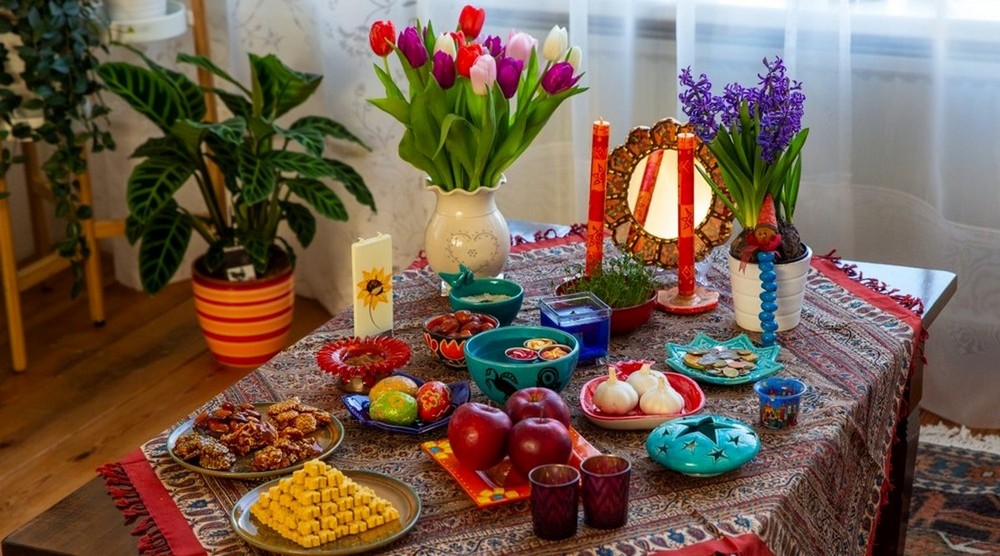
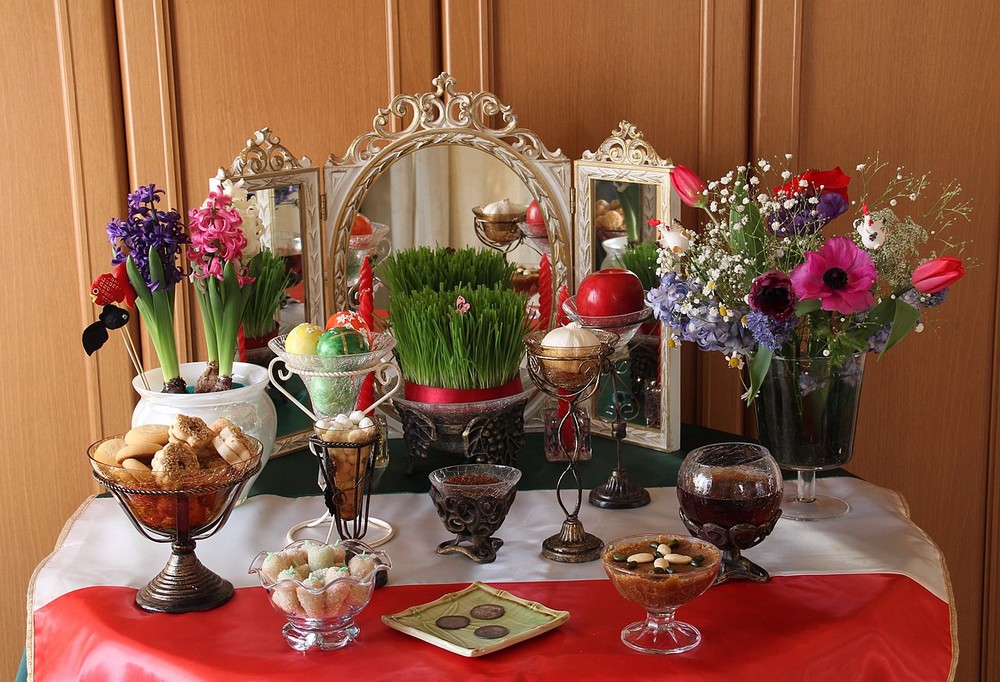
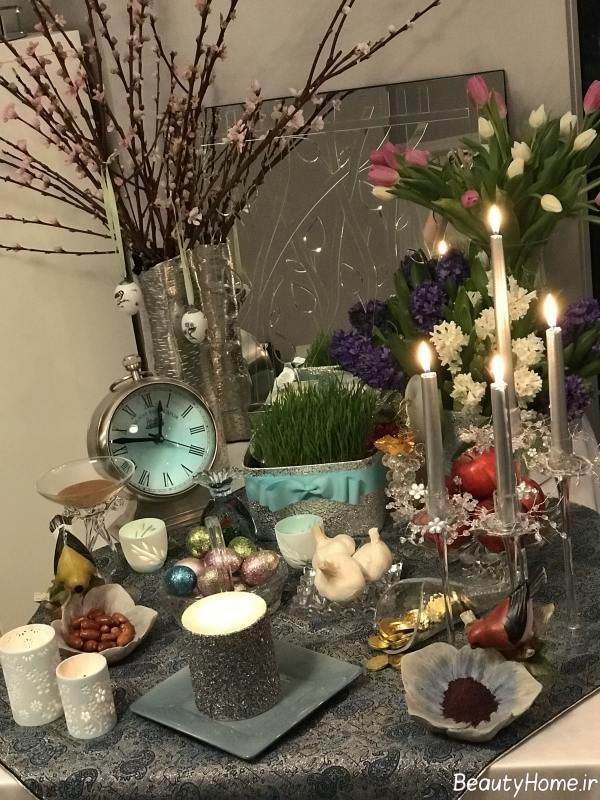
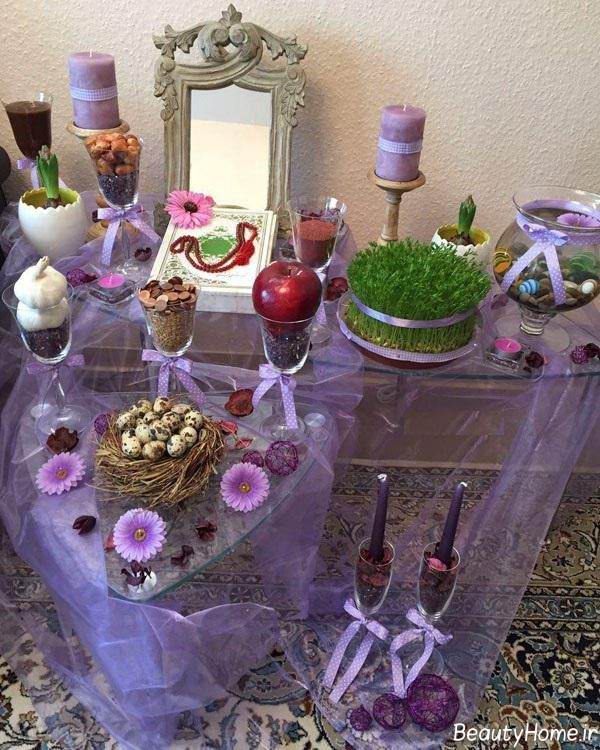
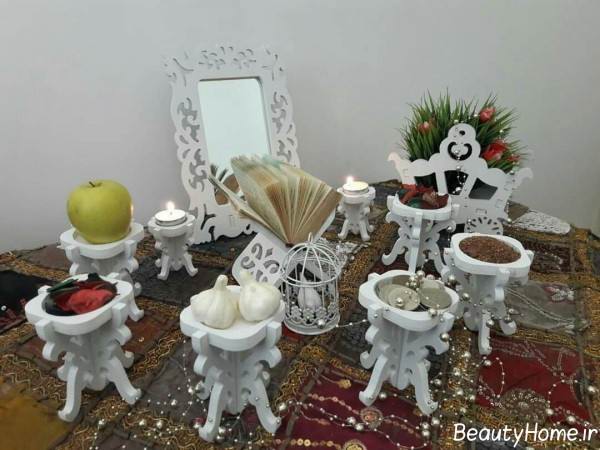
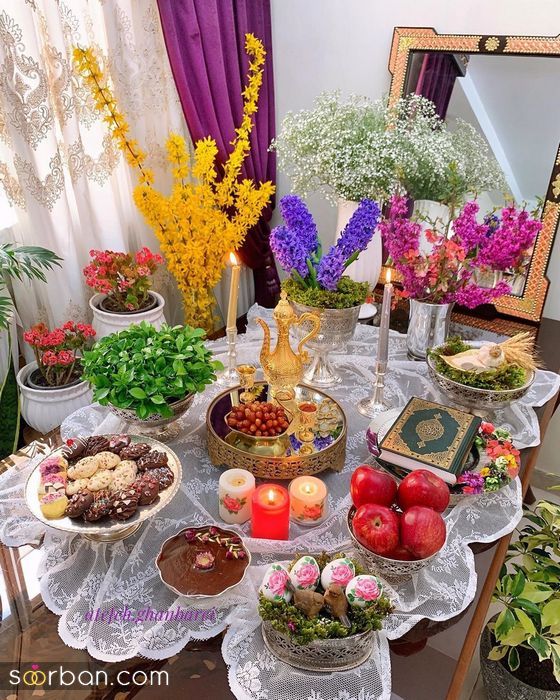
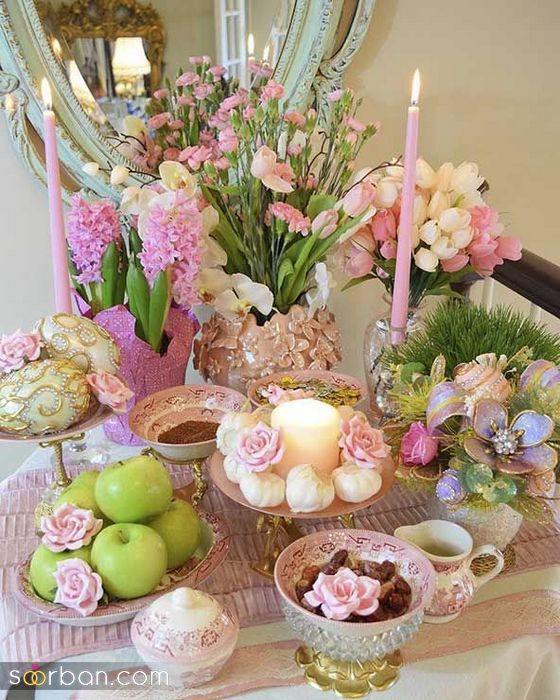
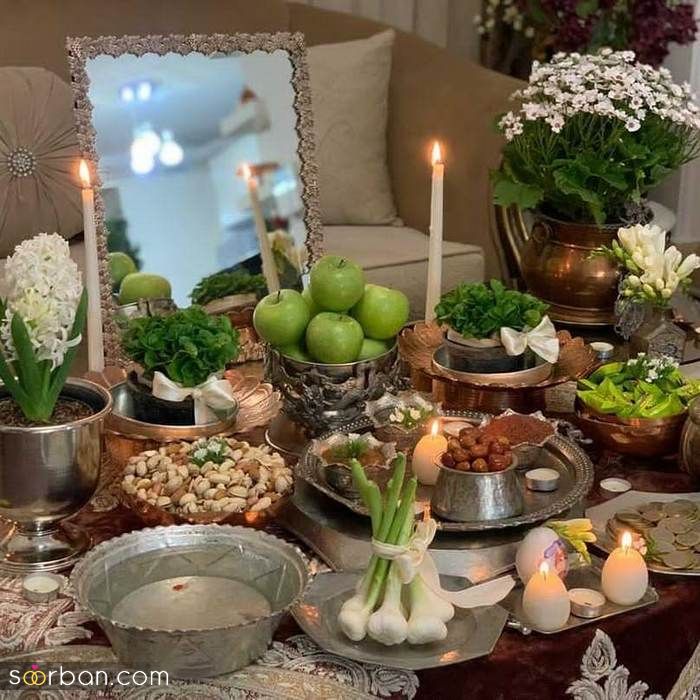
Décorations des diverses tables de Norooz dans plusieurs villes d’Iran de diverses années.
-Haft Sîn est un arrangement de sept objets symboliques dont les noms commencent par « S » et « Haft » est le terme persan pour « sept ».
https://fr.wikipedia.org/wiki/Haft_S%C3%AEn
(Les photos viennent des liens en persan)
- https://www.beautyhome.ir/decorating/51809/%D8%B3%D9%81%D8%B1%D9%87-%D9%87%D9%81%D8%AA-%D8%B3%DB%8C%D9%86-99
- https://yazdmemento.com/haft-sin-table-decoration-from-traditional-to-modern/
- https://axprint.com/blog/haftsin-nowruz
- https://www.soorban.com/decor-design/1390-%D9%87%D9%81%D8%AA-%D8%B3%DB%8C%D9%86-%D9%84%D8%A7%DA%A9%DA%86%D8%B1%DB%8C
*
✍ENGLISH
Photos:
Decorations of various Norooz tables in several Iranian cities of various years.
-Haft Sin, is an arrangement of seven symbolic items whose names start with the « S » and “Haft” in Persian means « seven ».
https://en.wikipedia.org/wiki/Haft-sin
(Photos are from Persian links)
- https://www.beautyhome.ir/decorating/51809/%D8%B3%D9%81%D8%B1%D9%87-%D9%87%D9%81%D8%AA-%D8%B3%DB%8C%D9%86-99
- https://yazdmemento.com/haft-sin-table-decoration-from-traditional-to-modern/
- https://axprint.com/blog/haftsin-nowruz
- https://www.soorban.com/decor-design/1390-%D9%87%D9%81%D8%AA-%D8%B3%DB%8C%D9%86-%D9%84%D8%A7%DA%A9%DA%86%D8%B1%DB%8C
─────
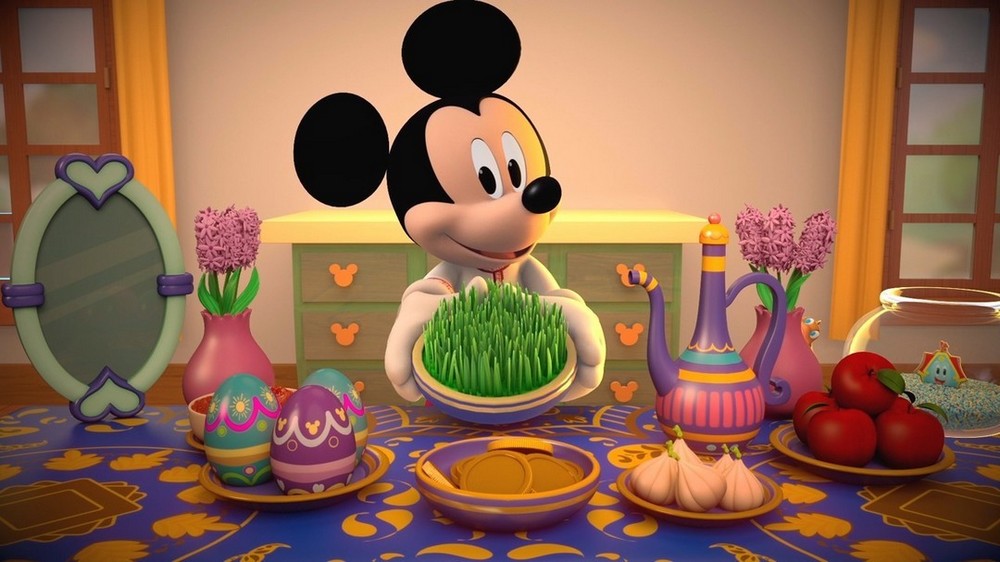
Photo:
En 2023, Norooz a fait son entrée chez Mickey Mouse
https://www.nbcnews.com/pop-culture/mickey-mouse-celebrates-nowruz-persian-new-year-rcna75468
✍ENGLISH
Photo:
In 2023, Norooz was introduced by Mickey Mouse
https://www.nbcnews.com/pop-culture/mickey-mouse-celebrates-nowruz-persian-new-year-rcna75468
─────
Les changements de saisons sont célébrés sous une forme ou une autre depuis quinze millénaires par les indigènes iraniens du Mont Zagros et du Plateau iranien.
Norouz, Nouvel An Iranien (1)
✍ENGLISH
The changing seasons have been celebrated in one form or another for over fifteen millennia by the indigenous Iranians of Mount Zagros and the Iranian Plateau.
Norouz, Nouvel An Iranien (1)
─────
IranPersiaVoyage
─────
 Iran Persia Voyage
.jpg)